 Europe
 Americas
 Asia
Asia Africa
 Oceania
Overview
If you book one organized tour in Armenia, it should be the Khor Virap, Garni, Geghard, Symphony & Charents Arch tour, which covers most of the country's headline sights in a single day. It might sound like a lot of stops for a single day, but they're all relatively close to one another so the tour doesn't feel rushed. Tours run for only $15 to $30 for the full day, and you can book through almost any hostel in Yerevan or online the night before. I booked this tour on GetYourGuide, which was $23 including lunch and a lavash-baking stop (all for the price of dinner back home).
The tour starts off in the morning from Republic Square in Yerevan, where you'll track down your tour van in a sea of tour buses filling up for the day. The day begins with your guide giving some background on Armenia and what's ahead: the Khor Virap monastery with Mount Ararat filling the sky behind it, the ancient cave monastery at Geghard, the pagan temple at Garni and the Symphony of Stones in the gorge below it. The sites are steeped in history, with two of the oldest churches in the world and an even older Greco-Roman temple, so the background is much needed.
You can also drive to all these yourself, but the tour is cheap enough that I wouldn't bother. The logistics are handled, you get a guide to explain what you're looking at, and if you're lucky, you get an awesome group like I did. We had a very eclectic group: a filmmaker from Utah, a Frenchman from Lille, an Argentinian tarot reader who had been to 112 countries, and three rowdy Germans from a Black Forest village. We had a blast and even ended up getting dinner at Tavern Yerevan later that night.
The Experience
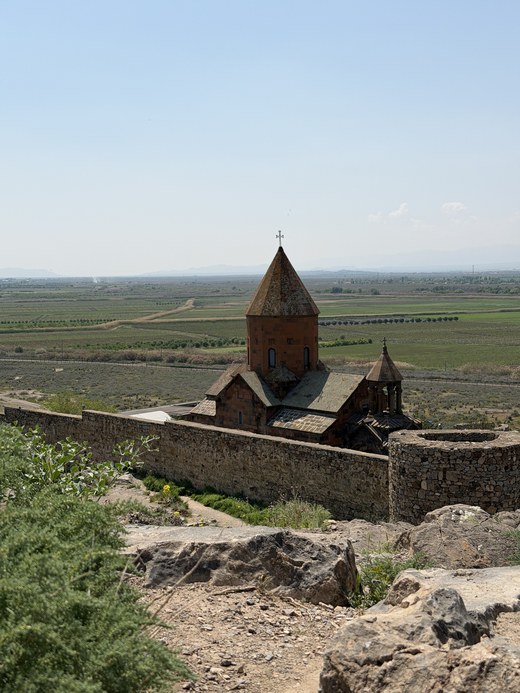
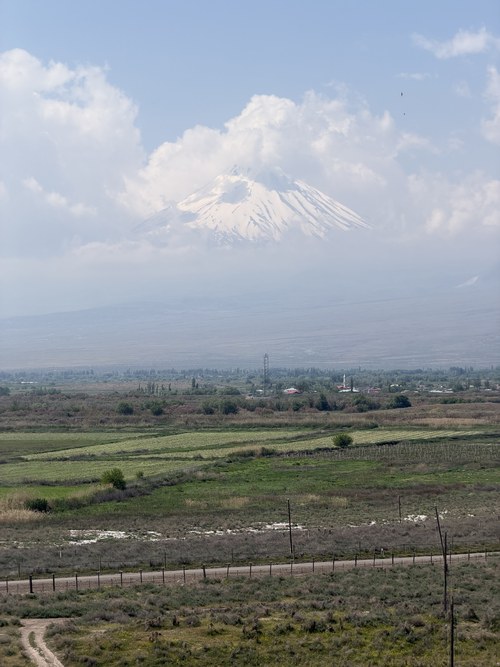
The first stop is Khor Virap, one of the most famous monasteries in Armenia, with a chapel dating back to 642 AD. It is likely the one you have seen photos of: a small fortified monastery sitting alone on a wide green plain with Mount Ararat filling the sky behind it. Mount Ararat is where the Bible says Noah's Ark came to rest, and today it is the national symbol of Armenia (despite being in modern-day Türkiye). For the best view, climb the little hill behind the monastery on a clear day.
Don't just photograph Khor Virap from the outside. Inside, the church is dark and minimalist, characteristic of ancient churches from this period. In the middle of the monastery, there is a single shaft of light that looks like it is coming from the heavens. Then climb down the ladder into the pit where King Tiridates III kept Gregory the Illuminator, the patron saint of Armenia and the future first head of the Armenian Church, for thirteen years for preaching Christianity. When the king finally released him, Armenia became the first country in the world to adopt Christianity, in 301 AD. The name Khor Virap means something close to “deep dungeon,” in honor of this legend.
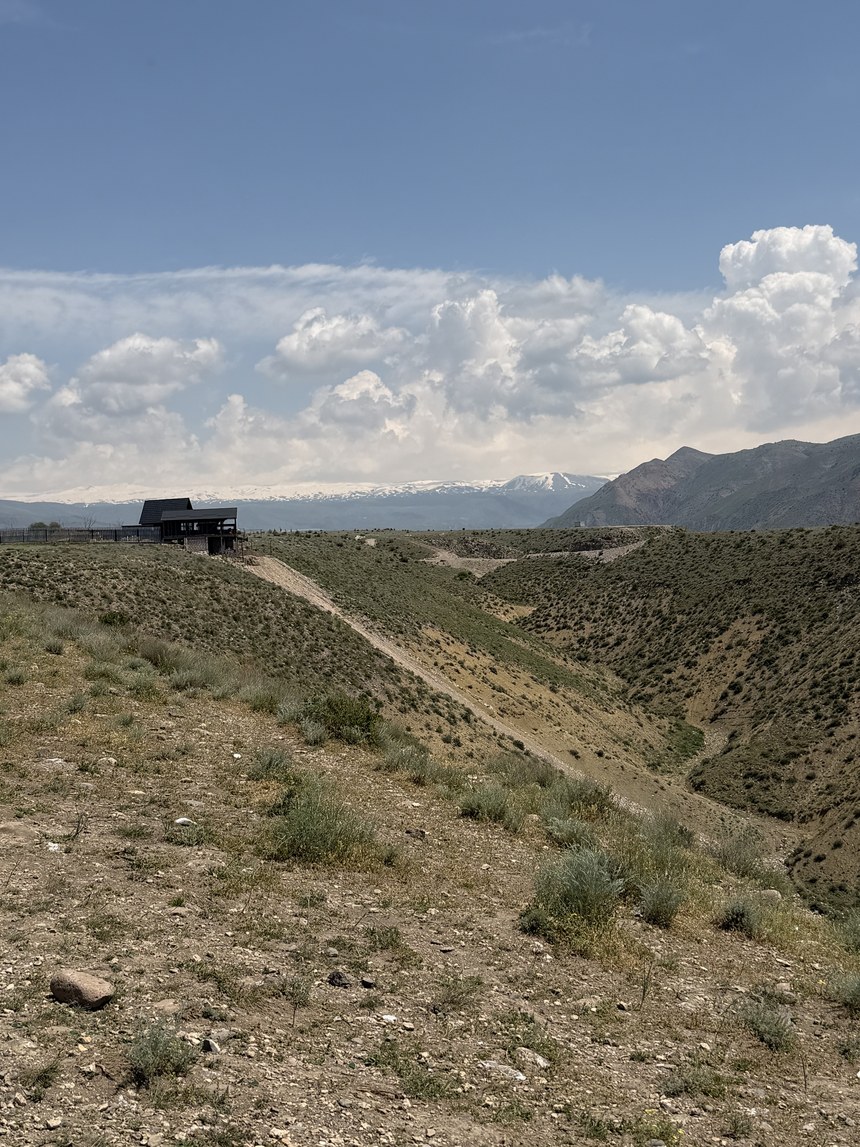
The next stop for most tours is Azat Reservoir. I'll be honest: it is a big reservoir with mountains around it and not very spectacular compared to the other natural sights in the Caucasus. It is a quick 10- to 15-minute photo stop.
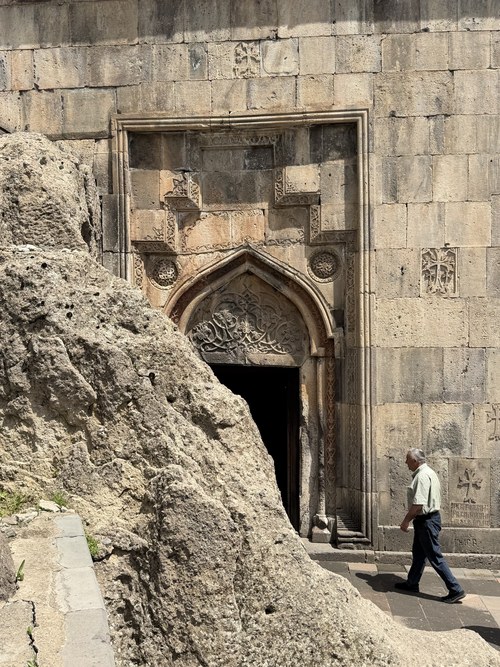
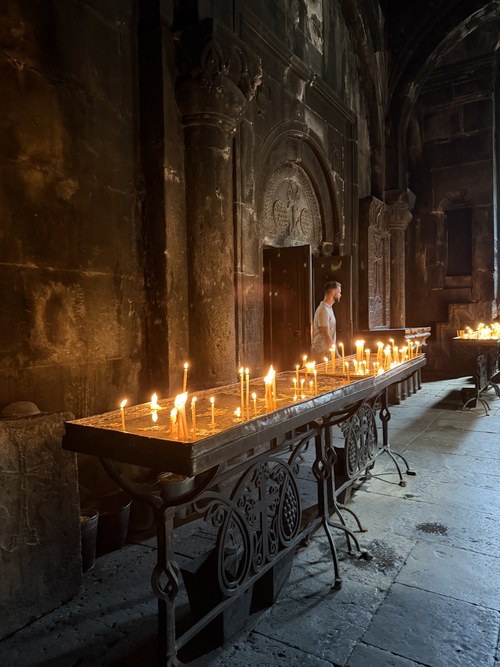
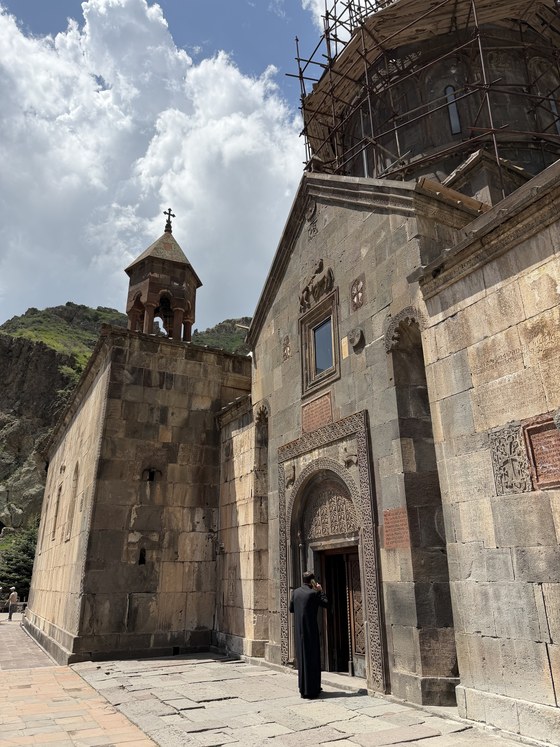
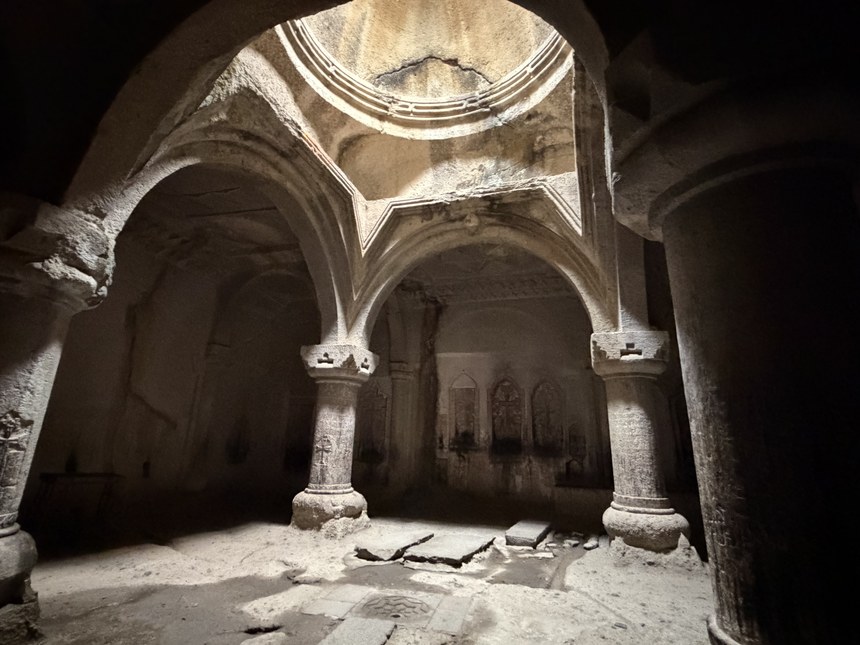
From the reservoir, the road climbs up the Azat valley to Geghard Monastery, my favorite monastery in Armenia (if we're allowed to have favorite monasteries in Armenia). It sits on a serene green hillside that was covered in white blossoms when I went, and the surroundings are truly breathtaking. Geghard is carved into the mountain itself: the front half of the church is a building, and the chambers at the back are cut straight into the cliff. You walk in from bright daylight into a black chamber with a shaft of light beaming down through the ceiling, and it is as close to a holy feeling as a building has given me. There is a mountain spring running through the rock inside and rows of yellow candles burning in the dark.
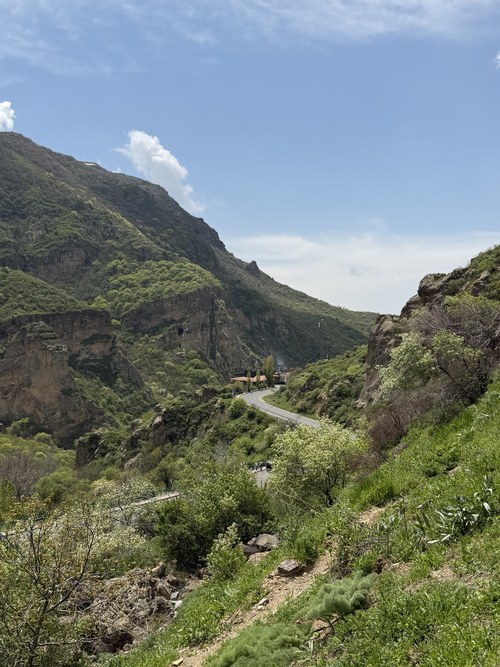
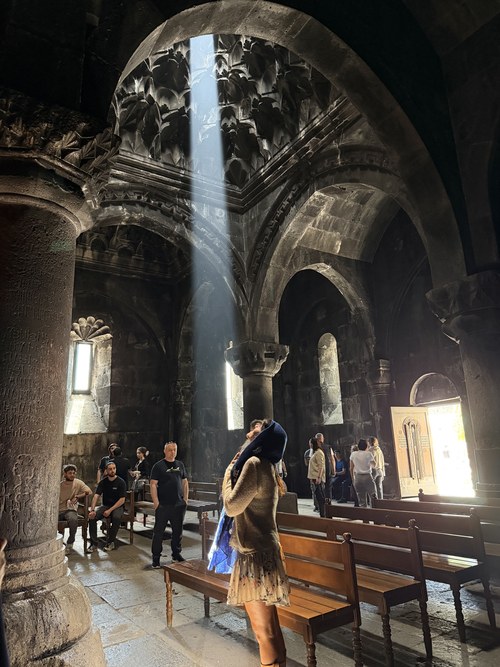
Geghard Monastery was founded by the same Gregory the Illuminator who was freed from the pit at Khor Virap, which makes it one of the oldest monasteries in the country. The name Geghard means “spear,” after the lance that pierced Christ on the cross. The relic was kept here for centuries and is now in the treasury at Etchmiadzin. The guided tour gives you roughly 45 minutes here, and I wish we'd had a bit more time.
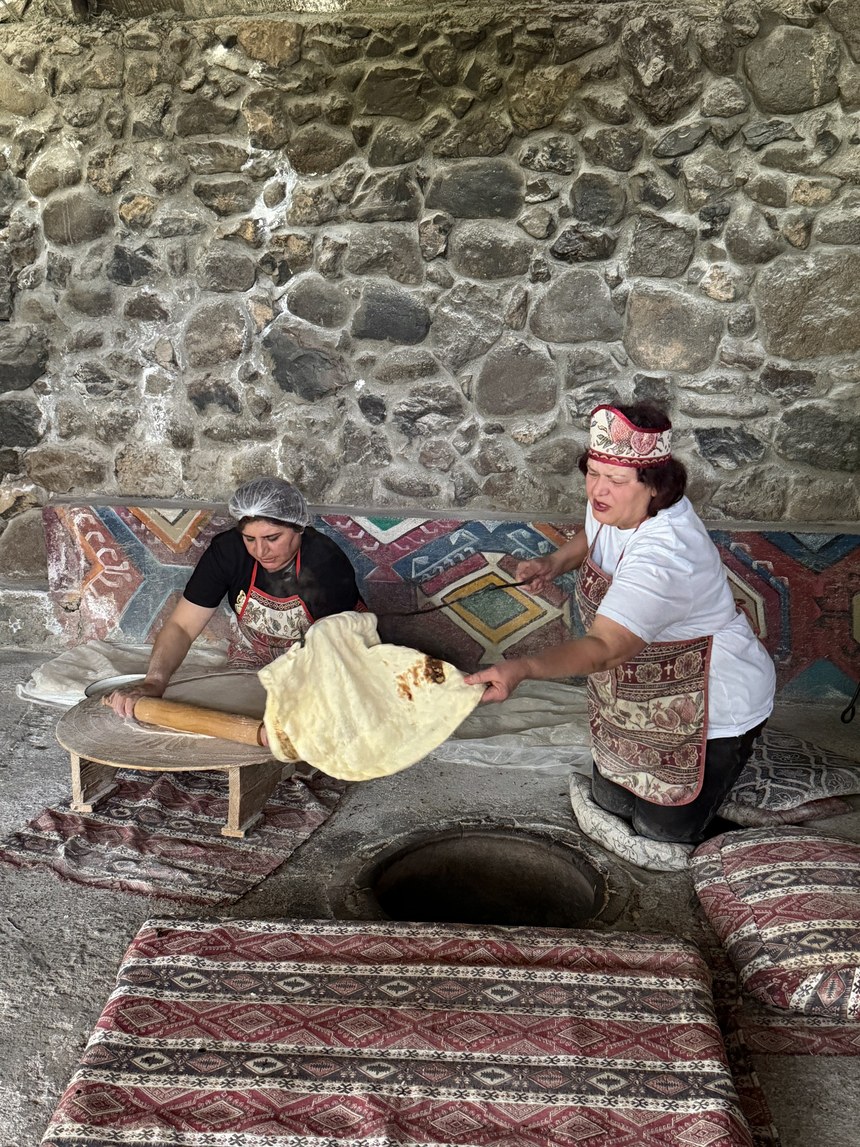
Next comes a lavash-baking demonstration. Know that it actually isn't a cooking class! I guess they didn't want a bunch of tourists sticking their hands in a 900-degree oven. An older woman the tour called the lavash master sits on a cushion beside an underground oven, takes a ball of dough, flattens it, spins it in the air like a pizza, lays it over a cushion and slaps it against the inside wall of the oven. A minute later she fishes it out with a metal rod. It comes out light enough to fall apart in your mouth, and was no doubt the best bread I ate in Armenia.
After three mesmerizing stops in the morning, we were getting hungry, and lunch was served at the same place. It was better than most tour lunches, with a full spread of salads (beans, carrots, fresh dill with tomato and cucumber and greens), then a kebab and more lavash. If you want to know what else to order in Armenia, visit the cuisine section of my itinerary article.
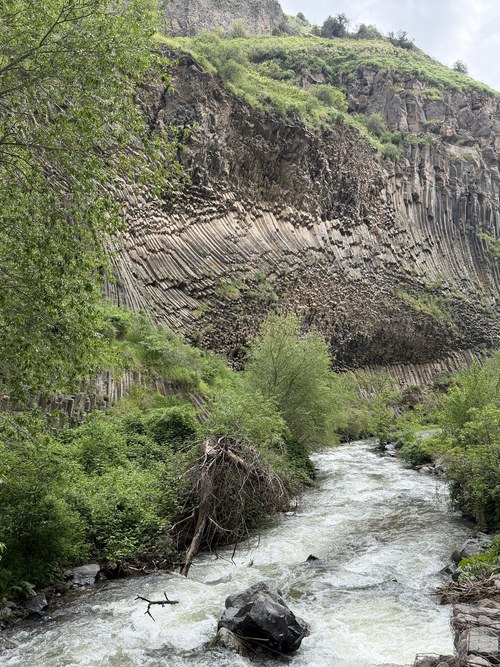
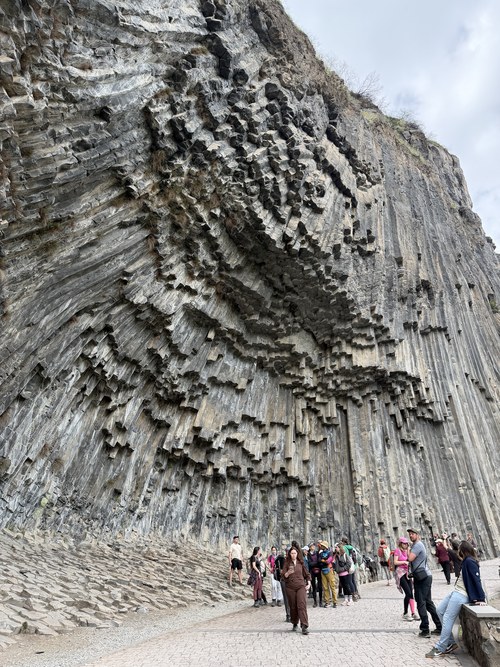
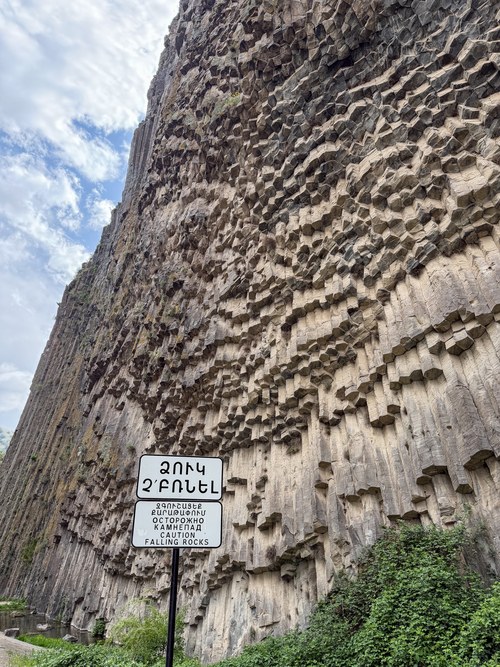
After lunch comes the Symphony of Stones in the lush green gorge below Garni Temple. The walls are hexagonal basalt columns that stand five or six stories tall, towering over the path you walk along the valley floor.
You may have seen similar rock formations elsewhere in the world, in Iceland and at the Giant's Causeway in Northern Ireland. They are formed by lava cooling slowly and cracking into perfect six-sided pipes. The walk along the valley floor is about a mile, with a river and greenery beside you the whole way.
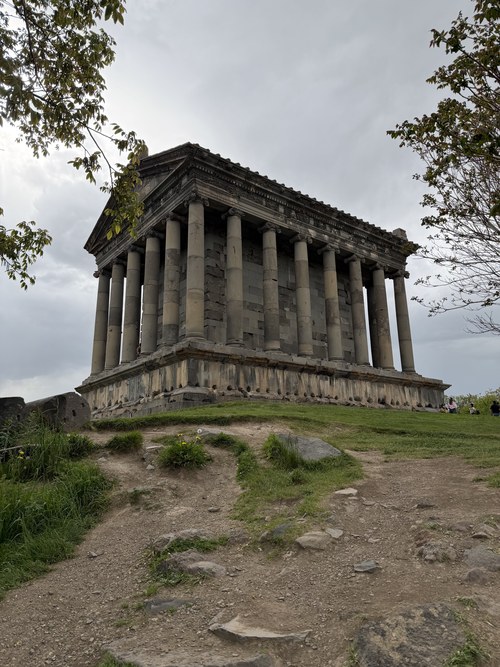
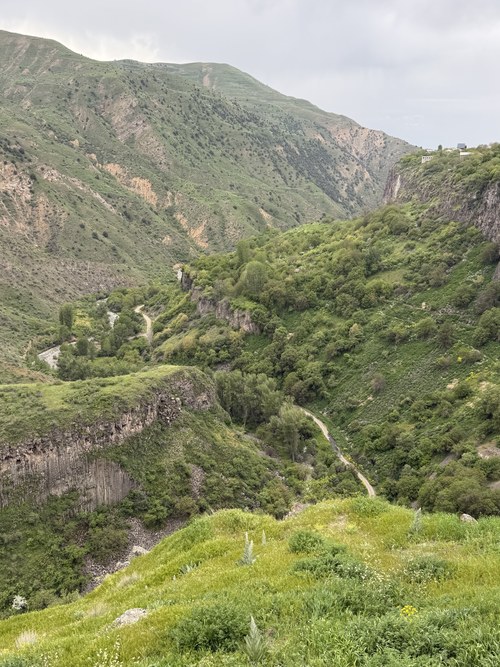
A five-minute drive takes you to Garni Temple, sitting on the cliff above the gorge. Built in 77 AD, it is a pagan temple in the Greco-Roman style and looks like a small Acropolis that lost its way. It is built of dark gray stone with columns all the way around, and the steps up are deliberately steep so that you bow as you climb them.
Temples like this once covered Armenia, but with the arrival of Christianity all of them were destroyed except the one standing before you today. Garni Temple only survived because a church was built right beside it. Stand at the edge and look back down the valley: for most of its life this temple sat up here entirely alone. The view was spectacular, even on a rainy day.
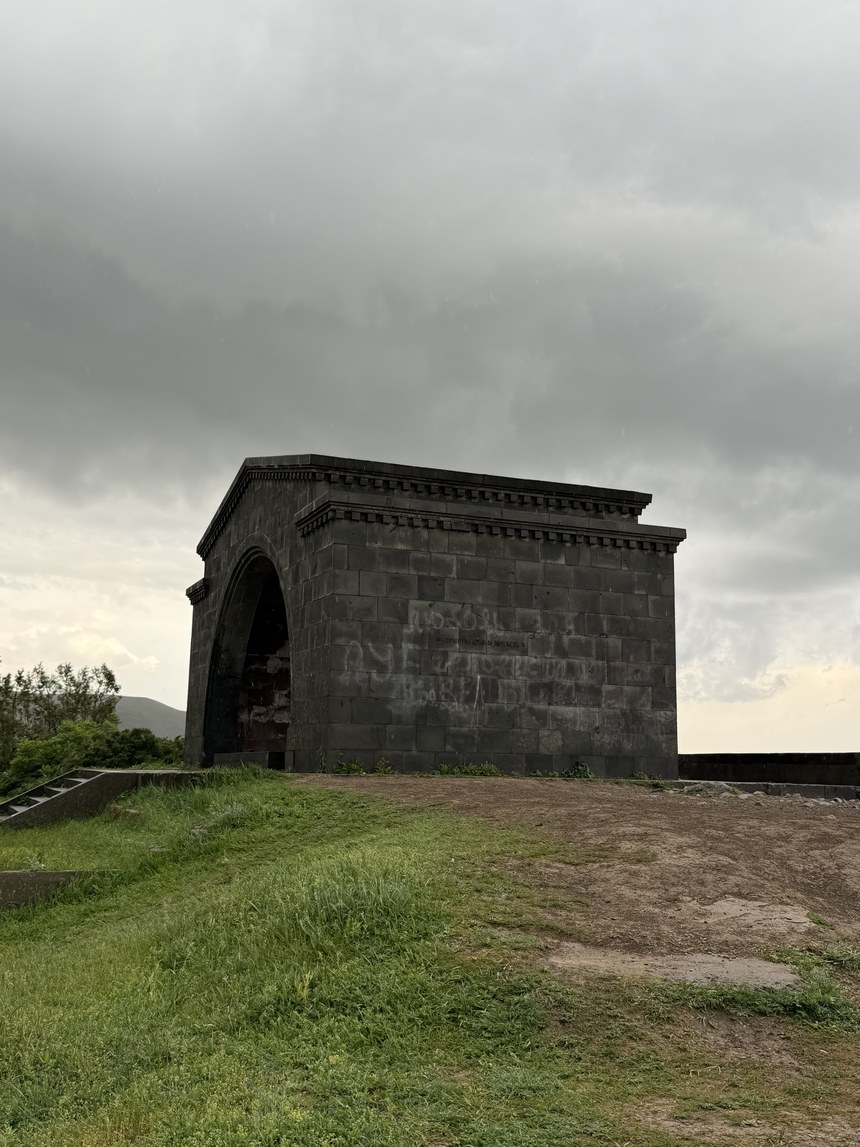
The last stop is Charents Arch, a Soviet-era monument to a famous Armenian poet named Yeghishe Charents. He loved Mount Ararat so much that the arch was built to frame the mountain perfectly. There was a torrential downpour when I visited, so I can't vouch for the view, but on a clear day it is supposed to be the best photo of Ararat on the route.
The ride back to Yerevan is short, but budget extra time for the drive home since the evening traffic into the city was awful. That wraps up one of my favorite day tours and a packed itinerary of amazing sites. If you're looking for more resources to plan your trip to Armenia, visit my 7-day Armenia itinerary and Yerevan city guide.