Europe
 Americas
 Asia
Asia Africa
 Oceania
General
Georgia is one of the most underrated countries in the world and is starting to become very popular in the backpacker community. The small country is located in the Southern Caucasus lodged between Russia, Turkey and its other smaller neighbors Armenia and Azerbaijan.
Georgia hosts jaw-dropping mountain scenery, ancient churches as the first Christian nation in the world, an incredible cuisine and Soviet Era history all packed into a small country. It's safe, affordable and welcoming to foreigners, yet still nowhere near as touristed as it deserves to be.
- Getting around
- Flights — there are non-stop flights to Tbilisi from 32 countries including most major European cities and key hubs like Istanbul, Dubai and Qatar. You can also fly into Kutaisi and Batumi
- Ridesharing — Bolt and Yandex both work well for taxis and are super cheap. A 30-minute ride can run you less than 15 Georgian Lari or $6 USD
- Public Transport — despite how small the country is, it takes surprisingly long to get around and much of it is covered in mountainous terrain
- Shared Marshrutka (Minibus) — the cheapest way to get around Georgia is the "Marshrutka" or a shared Minibus that leaves when it is full. Find times online on Wander Lush's Transport Tips section (the absolute best travel blog on Georgia), marshrutka.info, or ask a local! Budget travel time with Marshrutkas as they aren't known for their timeliness
- Trains — Georgia has a train network connecting its major cities. There are a mix of ultra modern trains that were built in the last few years and old Soviet Trains that move at a snails pace. View schedules online at the official Georgian Railway website
- GoTrip — a unique private taxi service that is surprisingly affordable and allows you unlimited stops along the way. I used this service to from Kutaisi to Tbilisi and made 4 stops along the way. I highly recommend this option if you're short on time and want to pack your day with activities. Expect to pay ~$100 per day
- Day Tours — these are a great way to avoid travel logistics and there are many that go to Georgia's more remote mountains regions like Kazbegi or Svaneti. Tours are generally very affordable from $20 - $30
-
Food — Georgian food is incredible, unlike the food I've had elsewhere and one of the best reasons to come. Here are a few of the highlights:
- Khinkali — large soup dumplings stuffed with lamb and beef. Grab them by the topknot, bite a hole, sip the broth
- Khachapuri — a bread boat of with pool of cheese and an egg cracked on top. Break off the pieces of the bread and dip them in the cheese to eat them
- Kubdari (or "Svan Pie") — a large meat pie stuffed with tenderized beef or pork, onions, garlic, and spices
- Wine — Georgia is considered the birthplace of wine and still uses its own ancient method of fermenting in clay pots (qvevri) buried in the ground. The amber "orange" wines are especially unique and the main type of wine they're famous for
- Chacha — is the local grape brandy which is very strong at 40% to 60% ABV. It is rude to refuse Chacha when it is offered to you and may be the reasons why Georgians drink the second most in the world!
- Language — Georgian has its own beautiful alphabet. There is tremendous ethnic diversity within Georgians themselves so there are 4 different Georgian languages with many local dialects on top of that. A lot of Georgians know Russian and English is common enough with younger people
- Money — Georgia is extremely affordable for tourists. I found Georgians also extremely fair with no "tourist tax" or scams that you'll find in other countries
- Safety — Georgia today is very safe and the country has made tremendous strides from the 1990's when it struggled with organized crime. However, Georgia has continuously had territorial disputes with separatist groups supported by Russia. Over 20% of its land is occupied since the 2008 Russo-Georgian War. When I visited, these areas were very well defined and fortified so there wasn't any fear of another conflict breaking out
- How to long to stay — for first-timers, I'd recommend at least 10 to 14 days to thoroughly explore the country. You can also combine Georgia with a trip to Armenia (read my guide here) which is only a three hour bus ride or overnight train from Tbilisi
Tbilisi
3 - 5 days recommendedTbilisi is one of my favorite cities in the world. It is the type of place where you could just spend days wandering or relaxing in a cafe. Officially founded in the 5th century AD, Tbilisi is one of the world's oldest cities and important hub on the Silk Road. Ancient churches, Soviet brutalism, ultra-modern sculptures and great restaurants are all within walking distance of each other.
I would dedicate at least 3 days to exploring the city. It is also a great place to base yourself for day tours around the country so add on extra days here for each day tour.
- Old Town Tbilisi — a very pretty neighborhood, with cobblestone streets, carved wooden balconies and ancient churches tucked everywhere. The best place to stay to be walking distance from most major sites
- Clock Tower — a charming, crooked tower designed by Georgian artist Rezo Gabriadze, covered in intricate hand-painted tile mosaics. Visit Anchiskhati Basilica right next door
- Anchiskhati Basilica — right next door to the clock tower is one of the oldest churches in Tbilisi. It has small, dark, flickering candles and a polyphonic choir that performs daily at 10AM
- Dry Bridge Flea Market — a daily open-air market on the Dry Bridge where local vendors lay out old Soviet memorabilia, paintings, jewelry and other antiques on blankets and tables. Great place to buy souvenirs and make sure to negotiate
- Georgian National Museum — the national museum with the history of Georgia from prehistoric to modern times. The Soviet occupation hall is worth your time
- Queen Darejan Palace & Balcony — on the other side of the Mtkvari river, you'll find a Queen Darejan Palace terrace with a beautiful view of old town
- Right below the balcony by the river is Capela Sfântului Abo, a hidden shrine tucked away in a cave in the hillside with beautiful golden mosaics. Often missed by tourists
- Holy Trinity Cathedral — the largest and most impressive cathedrals in Georgia, the spiritual heart of Georgia. The gold dome towers over the entire city and is visible from almost everywhere. The interior is grand and solemn with towering vaulted ceilings, and the courtyard is lined with enormous stone crosses covered in intricate carvings
- Rike Park — a modern riverside park with bizarre alien-shaped sculptures and the futuristic, wavy Peace Bridge. A cool contrast to the old town right across the water. The beginning of the cable car up to the next location called Sololaki Street
- Sololaki Street — located on a hill overlooking old town. You can hike up here or take the cable car from Rike Park. Spend an afternoon walking down the Sololaki Street and visiting all the attractions on top of the hill.
- Mother of Georgia — a Soviet era silver statue of a lady watching over Tbilisi. She a perfect encapsulation of the Georgian national character: holding a bowl of wine in her left hand to greet friends and a sword in her right to ward off her enemies
- Tabor Monastery & Viewpoint — it is a rewarding climb up through an old Georgian neighborhood that most tourists skip entirely. There's a brand new boardwalk-style pathway and an almost 360 view at the top. In my opinion, the absolute best place to watch sunset
- Betlemi Rise Viewpoint — another great place to watch the sunset over old town. The walk up passes through the old Betlemi neighborhood with its wooden balconied houses
- National Botanical Garden — a 128 hectare garden tucked directly behind Narikala Fortress, with a history stretching back over 400 years to the royal gardens of the Georgian kings. The main draw is the 22-meter Leghvtakhevi Waterfall with a 19th-century wooden bridge crossing over it
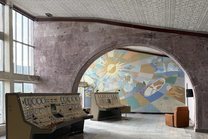
- Soviet-era relics — Tbilisi is defined by both the Ancient Georgian kingdoms history and also the more recent Soviet history. Explore the architecture and art that defined this era
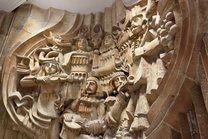
- Chronicles of Georgia — a massive, unfinished Soviet monument covered in metal biblical reliefs. Walk through the courtyard with huge Egyptian-like hieroglyphic pillars towering over you. It was absolutely mesmerizing and I caught a televised traditional Georgian dance performance at the top. It is a 20 minute ride from Old Town, but absolutely worth the trek and one of the highlights of Tbilisi
- Soviet Mosaics are scattered throughout the whole city, often cover the entire face of tall buildings. Some are hidden away and hunting them down is half the fun:
- Emergency Management Mural — an impressive Soviet-era mosaic on the side of the active fire station. The best view is from the balcony of the Central Bus Station or the parking lot next door
- Laboratory of the Ministry of Forestry Mural — a stunning Tree of Life mural that stretches 5 stories tall and is covered in vibrant colors. It is located in the neighborhood of Saburtalo
- Brutalist Architecture — I know brutalist architecture is an acquired taste (...and not for everyone). Tbilisi is home to some of the most famous examples including:
- Nutsubidze Skybridge — a checkered skybridge connecting two massive Soviet-Era apartment towers. Take the original coin-operated elevator and admire the striking geometric shapes. It feels completely forgotten by time. Located a short car ride from old town
- Palace of Rituals and Bank of Georgia are also striking Brutalist architecture sites in the city
- Fabrika — a converted Soviet clothing factory that has been remodeled into a street art area. There is a hostel, coffee shop, hip clothing shops, bars and street art. A great stop for a morning coffee
- Racha — a no-frills spot for khinkali, popular with locals. It was extremely affordable and I found myself eating here multiple times while I was in the city
- Cafe Daphna — an upscale restaurant serving some of the best beef khinkali in Tbilisi
- Puri Guliani — a modern restaurant located right next to the river. Get the Khachapuri and sample local wines here
- Pasanauri — another great restaurant with a great deer stew with pomegranate seeds, served with bread. One of my favorite meals in Georgia
- Sasadilo Canteen — hidden inside a warehouse market near the main train station. They had an amazing spread of bread with dips and cheese dumplings in a herb-oil sauce
- Amra — Abkhazian cuisine with unique regional dishes that are hard to find elsewhere in Georgia
- Shavi Coffee Roasters — the best coffee in the city, in a super trendy space inside an old building
- Apotheka — a popular bar in old town with an old pharmacy theme and great cocktails
- Wine Factory N1 — a good spot to try through a range of Georgian wines
- Graminea ("Wet Fig") — a wine shop in old town with a great selection. A relaxed place to sit and try a few glasses of Georgian wine
- Envoy Hostel Tbilisi — a hostel located right in Old Town Tbilisi, with an amazing rooftop overlooking the city. It is walking distance from all major historical sites. They also offer a number of affordable tours including unique one-way transfer tour to Yerevan from Tbilisi with a lot of interesting stops along the way


Double-tap to open in Google Maps
Day Trips from Tbilisi
Tbilisi is a great spot to base yourself for a variety of day trips throughout the country. Georgia is a relatively small country so it is easy to explore vastly different parts of the country by day trip. I've written about these trips in order of my favorite in case you're struggling to decide.
Kazbegi — the Northern mountain region of Georgia located right on the border with Russia. The drive through the Georgian countryside alone is worth the trip: snow-peaked mountains, green valleys, herds of horses and sheep. Book a group tour from Tbilisi for about $20. Here are some key stops on the trip:
- Gergeti Trinity Church — perched high on a hill above the clouds with snow-capped peaks behind it. One of the most iconic images in Georgia and amazing to wander around for a few hours
- Georgian-Russian Friendship Monument — a circular fresco on top of a mountain pass built during Soviet times. It is very colorful with depictions of Georgian warriors on one side and Soviet soldiers on the other. It was a very pretty stop along the way, built completely in the middle of nowhere
- Zhinvali Reservoir & Ananuri — an ancient church from the Georgian golden age surrounded by a turquoise reservoir, with castle walls you can climb
Mtskheta, Gori and Uplistsikhe — venture out to central Georgia with a historic tour of Mtskheta (the former capital of Georgia), Gori (Stalin's hometown) and Uplistsikhe (an ancient cave town). I did this trip independently since there are many public transit connections, but there are also day tours from Tbilisi
- Mtskheta — the ancient capital of Georgia located at the center of where three rivers meet. It lies only 20 minutes from Tbilisi with frequent connections so it is easily done as a half day to full day trip. The main thing to see in Mtskheta are the many churches. Here were my two favorites:
- Svetitskhoveli Cathedral — one of the largest and most impressive churches in Georgia. Locals come from all over Georgia to pray here. The cathedral has a massive yard, high vaulted ceilings and many gold frescos
- Jvari Monastery — built around 500–600 AD on a hilltop. There is an amazing view over the confluence of the three rivers, making it a great place to watch the sunset
- Gori — The infamous Soviet dictator, Stalin, was actually Georgian. He was born in Gori under the name Ioseb Jughashvili, later changing his name to the more Russian Joseph Vissarionovich Stalin. His hometown is a very interesting historical visit to learn more about the dictator's life
- Stalin Museum — a surprisingly well-curated museum where you can learn about Stalin's life. Take the guided tour for the best explanations. He was born to a poor Georgian family in Gori. As a young man he robbed banks and eventually transformed himself to the authoritarian leader of the communist party as well as one of the most important figures in history. You can visit his private train car and his childhood home here as well
- Gori Fortress — a broken down fortress in pretty bad shape, but a decent view of the city. At the bottom of the hill lies the Memorial of Georgian War Heroes. It is a striking WWII monument with a circle of knights each missing a body part, an intentional artistic choice
- Uplistsikhe — an ancient cave city carved directly into the sandstone cliffs, with a maze of tunnels, pagan temples, wine cellars, and dwellings dating back to the Iron Age. Once a major political and religious center on the Silk Road, it was later abandoned after the Mongol invasions. Today you can freely wander through its interconnected caves and climb to the highest point for sweeping views over the Mtkvari River valley
Kakheti Wine Region
Take a trip to Kakheti, Georgia's wine region in the country that invented wine! It is an easy day trip located only 2 hours east of Tbilisi. Here you'll find rolling vineyards, hilltop towns and family wineries still practicing the ancient Georgian tradition of fermenting wine underground in clay pots. Here is the tour I booked from Tbilisi with the following stops:
- Traditional Bread Baking — most tours start at a small family house where an old woman makes Georgian bread in a wood-fired oven, pressing the dough straight onto the walls without gloves. You eat it in the garden with salty Georgian cheese and sweet red "breakfast wine"
- Bodbe Monastery — a beautiful nunnery overlooking a huge valley, with two chapels (one modern, one from the Georgian golden age). The garden here is gorgeous and it is considered one of the best preserved monasteries in all of Georgia
-
Sighnaghi — the Georgian "city of love" perched on a hilltop with castle walls wrapping right around it. It is a quaint little town where you can explore the cobblestone streets or walk the walls for great views over the valley. The Sighnaghi Viewpoint also has some great views of the town
- Find the Toastmaster (Tamada) statue in the main park. In Georgian culture, the Toastmaster or Tamada serves an important role in every feast. They give a toast and everyone drinks a liter of wine from a horn. Supposedly just touching the statue gives you better chugging ability
- Family winery in Kvareli — the most interesting stop where you see the ancient Georgian method of fermenting wine in clay pots buried in the ground. Make sure to try the local orange wines and a chacha tasting is usually included
- The final stop is the KTW Wine House where you explore the modern side of the Georgian wine industry. There is a tour through a modern wine warehouse with hundreds of huge metal storage containers. The tour leaders keep the wine flowing with unlimited pours. Our whole tour had a blast and it was a great chance to get to know the other people on the tour
Svaneti Region
3+ days · fly or full-day drive from TbilisiSvaneti was one of the most incredible mountain regions in the world and my personal highlight of Georgia. It is a remote mountain region covered in mysterious medieval stone towers, lush green valleys, dotted with colorful wildflowers and massive glaciers. It is an astounding place to hike and felt like a different world. Visit in the summer as the region since the roads are closed during the winter.
Mestia is the main town and transport hub in the Svaneti region where you'll likely base yourself. There are many of smaller villages dotting the mountain valleys that are worth visiting to get a taste of traditional Georgian mountain life. Ushguli is one of the longest continuously inhabited settlements in Europe and one of the most popular to visit. Spend at least 3 days here, you won't regret it!
- No matter how close it looks on the map, the journey to Mestia will be long and tough to figure out. The roads are particularly rough and transport options are limited. It is 1000% worth it when you get there, but just be prepared!
- Driving — Most Georgians would not recommend driving yourself since the roads are treacherous. As you get deeper in the mountains, they become one-way dirt roads with locals driving at break-neck speeds around blind corners
- Shared Marshrutka (Minibus) — this is the cheapest, but most challenging option to get to Mestia. Direct marshrutkas depart daily from Didube Bus Station in Tbilisi at around 7 AM and the journey takes 9–10 hours total and costs at ~50 GEL or ~$18 USD
- Train / Bus + Transfer via Kutaisi — the option I choose. I first took a train from Tbilisi to Kutaisi (~4 hours). I spent the night in Kutaisi and booked a transfer with BudgetGeorgia to Mestia for 80 GEL or $30 USD. We stopped on a few stops along the way with the drive taking 6 hours, but it was nice not having to deal with logistics
- Train / Bus + Marshrutka via Zugdidi — take the train from Tbilisi Central Station (once a day from 8:15AM to 2:20AM). From Zugdidi, catch a marshrutka to Mestia which takes another 3–4 hours. It can be difficult to time this transfer in the same day as marshrutkas from Zugdidi to Mestia are infrequent
- Private Transfer — the most comfortable, but expensive option. You can use a driver from GoTrip and expect to pay around 350–400 GEL ($125–145) for a minivan of up to 6 people one way. Journey takes around 7–8 hours. A great option if you can split with others or are traveling heavy bags
- Flight with Vanilla Sky — by far the fastest option at around 40–60 minutes and costs around 90 GEL (~$33) one way. These flights are in tiny 17 seater planes. The catch is that the flights are often canceled due to weather (flying into the mountains in a tiny plane), the website is borderline non-functional and it sells out almost instantaneously. Best of luck if you try this option!
- Mestia Town — a tiny mountain town studded with Svan defensive towers. Walk the river, wander the side streets and just take it all in. The local region is inhabited by the Svan people who have their own language and rich cultural heritage. Each family is in charge of maintaining their own medieval tower (dating back to the 8th and 9th centuries) that was used to protect against invaders and avalanches
- Mikheil Khergiani House Museum — a charming museum run by a local family dedicated to a legendary Soviet climber Mikheil Khergiani. It is located on the edge of town.
- Climb to the roof of the tower for one of the best views in the whole region! Standing on top of a tower is a bit sketchy, but worth it
- Chalaadi Glacier hike — a short ~45-minute hike through forest and red and white rocks to the glacier. Hire a 4WD driver from Seti square to take you to the head of the trail or book a group hiking tour for 80 GEL
- Ushguli — one of the most beautiful places I've ever visited. A cluster of four medieval villages at 2,200m with ancient Svan towers rising above roaming horses and green hills covered in colorful wildflowers, and the massive white peaks of the Caucasus forming the backdrop. The whole place feels completely frozen in time. It is a 1.5 hour drive from Mestia and I booked this day tour
- Queen Tamar Castle — climb up to this viewpoint above the village for the best view in Ushguli. You can see the full valley with towers below and huge white mountains behind. The hillside covered in wildflowers just below the tower is one of the most beautiful spots on the whole trip
- Lamaria Church — a 12th century church perched on a hill above the village. Walk around the outside rather than just going in since the views back down over the valley are stunning
- Mestia to Ushguli hike — Georgia's most famous multi-day trek and considered one of the best hikes in the Caucasus. The full route covers about 57km over 3–4 days through high mountain valleys, medieval Svan villages and some of the most dramatic scenery in the region, passing under peaks that top 5,000m. In each village, you stay at family-run guesthouses that provide a bed and home-cooked meals
- Cafe Laila (Mestia) — the most popular restaurant in Mestia. Get the local Svan specialties including the Kubdari (a huge pita stuffed with beef and onion) and a mulled wine
- Ine's Corner (Mestia) — a tiny restaurant run by an old woman and her daughter. A great spot for breakfast
- Agra Cafe (Ushguli) — a small cafe inside of a traditional Svan house. Try the Matsoni soup, a white cheesy soup served with a side of bread
- Latour Mestia — a wonderful family-owned hotel with a brand new wooden lodge interior. Located in a quiet area and a short walk from the center of Mestia. The owner was extremely friendly and helpful
Other Places to Consider
Georgia is small and packed, so it's easy to string together more stops depending on how much time you have:
- Chiatura — a fascinating former Soviet mining town tucked into a narrow river valley. The town is full of old apartment blocks, rusting industrial infrastructure, and dramatic cliffs connected by cable cars, giving it an unmistakably post-Soviet atmosphere
- Cable cars — originally built in the 1950s to transport miners and residents across the steep valley, Chiatura's cable car network is one of the most unusual public transport systems in the world that is still used by locals today. Ride the modern gondola for panoramic views over the town, then seek out one of the surviving retro cable cars with their distinctive bubble windows
-
The Mines — at the top of the cable cars lie the abandoned remnants of Chiatura's once-massive mining industry. One of the highlights is a gigantic excavator, with hard hats, documents, and equipment still scattered inside the operator's cabin
- Katskhi Pillar (near Kutaisi) — a towering 40-meter limestone monolith supports a tiny monastery perched impossibly on its summit. For centuries it served as a retreat for solitary monks seeking isolation, and even today only the resident monk is permitted to climb to the top. It is located close to Kutaisi, but is not worth going out of your way to see
- Kutaisi — the second largest city in Georgia and worth a stop mainly as a base for the surrounding area. The real draws are the day trips: Gelati Monastery, Prometheus Cave, Martvili and Okatse Canyons and Chiatura
- Batumi — Georgia's Black Sea resort city, sometimes called the "Las Vegas of the Black Sea" for its casinos, glitzy skyscrapers, nightlife and popularity among Russian gamblers. The seafront boulevard is the heart of the city and great for walking. Other highlights include the charming old town, the Argo Cable Car and the rotating Ali and Nino statue. Modern and very different from anywhere else in Georgia
Explore More