 Europe
 Americas
 Asia
Asia Africa
 Oceania
General
Finland is the calm, clean, design-forward corner of the Nordics: a country of forests, lakes and islands, with a compact, elegant capital in Helsinki and the Arctic wilds of Lapland far to the north. I'll be honest: I only visited Helsinki and wasn't very impressed with the city (maybe I got unlucky or completely missed something). I wouldn't recommend visiting the city on its own, but it's a pairs naturally with the snowy Lapland region in the far North or a ferry across to Tallinn, Estonia or Stockholm, Sweden.
- Getting around
- Helsinki — I'll give it to Helsinki. It is one of cleanest, well-organized cities that I've ever visited. Using the metro network is a breeze to use and it covers the compact city center. There are also many ferries that run out to the many islands right off the coast of the city
- International Ferries — Helsinki is a Baltic hub with ferries connecting it to Tallinn (~2 hours) and Stockholm (an overnight ferry), making it easy to combine Finland with other countries. Finns often go to Estonia by ferry for the day for a night out or even avoid high sales taxes
- Long Distance Trains & Buses — Finland has an extremely well-connected transport system. You can get almost anywhere by train or bus
- Money — the official currency is the Euro. Like all the Nordic countries, Finland is very expensive, so budget accordingly
- Food — Finnish food was very interesting to try and I personally found it similar to other Nordic cuisines. If you're feeling adventurous, try the reindeer with lingonberries and mashed potato (the classic dish). Other popular dishes are salmon, the savory rice-filled karjalanpiirakka pie, and cardamom-spiced pastries. Finns drink more coffee per capita than almost anyone in the world, and it's excellent
- Language — Finnish is a Uralic language and famous for its complexity. Finns also speak some Swedish and English is spoken fluently almost everywhere (+90% people are conversational or fluent in English)
- When to go — you'll get two completely different experiences if depending on the season that you visit Finland: summer brings near-endless daylight ("white nights") while winter is for the northern lights, huskies and snow up in Lapland
- How long to stay — 2 days is enough for Helsinki and add several more days for a Lapland adventure
Helsinki
1–2 days recommendedHelsinki is a capital of neoclassical squares and Baltic islands: easy to cover on foot in a couple of days, with a sea fortress just offshore as the highlight. To be frank: it is far from my favorite European capital. I found it to be almost eerily quiet and more relaxing than thrilling. Helsinki is worth 1 to 2 days to fully explore, especially as part of a longer trip.
- Senate Square — the center of Helsinki and worth a few hours to explore the following historical monuments. The architecture surprisingly reminded me of American government buildings in Washington D.C. as most of the government buildings in Helsinki were built in the 1800s
- Helsinki Cathedral — the gleaming white, green-domed neoclassical cathedral standing at the top of the steps above Senate Square, the heart of old Helsinki laid out in the early 1800s when the Russians made it the capital. It's quick to see and free to step inside and the cathedral steps are a favorite spot to sit in the sun
- Presidential Palace — the official residence of Finland's president, sitting right on the Market Square waterfront. It began as a merchant's mansion in the 1810s and was rebuilt into the restrained neoclassical palace you see today. You can't go inside, but it is worth a glance from the square as you pass, especially when the ceremonial guard is posted out front
- Finnish House of Nobility — Ritarihuone, a striking red-brick neo-Gothic hall a couple of blocks from Senate Square, built in the 1860s as the assembly house for Finland's nobility back when the country was a Russian grand duchy. It also isn't usually open to visitors, but the ornate facade studded with coats of arms is a nice detour on the walk between the cathedral and the water
- Market Square harbor — visit the open-air market (Kauppatori) on the waterfront at the ferry port. There is a seaside market with a cluster of orange tents selling berries and produce, crafts and cheap hot food. Grab a coffee and try the traditional karjalanpiirakka, a thin rye pastry boat filled with rice porridge and topped with egg butter, or a plate of fried vendace (little lake fish)
- Suomenlinna Sea Fortress — only a 15-minute public ferry from the Market Square, Suomenlinna was the highlight of Helsinki. Take the ferry out to the sea fortress spread across a cluster of islands. It was built by the Swedes in the 1700s and later held by Russia before Finland was ever independent.
- It's still a lived-in place, with a few hundred residents with cafés and small museums tucked among the ramparts. Give it a couple of hours to walk the shoreline, climb over the old bastions and cannons and poke into the dry dock and tunnels. I enjoy how peaceful the area was; the view back over Helsinki's island-dotted harbor from the ferry deck is the best in the city
- Allas Pool — a floating pool and sauna complex right on the harbor by the Market Square, with a heated freshwater pool, a cold Baltic seawater pool and saunas, all open-air looking straight out over the water. It is a very Finnish way to spend a couple of hours: sweat in the sauna, then plunge into the sea
- Temppeliaukio Church — the Church of the Rock, a Lutheran church from 1969 blasted straight into a granite outcrop, with rough stone walls, a huge copper dome and a ring of skylights that pour daylight inside. It is small and there is a modest entry fee, but it is unique and an easy walk from the center
- Seurasaari — a wooded island just northwest of the center that works as both a quiet nature escape and an open-air museum. The area is home to old wooden farmhouses, cottages and a church, all of which have been moved here from around Finland. They are scattered among the trees, with easy trails linking them. A good half-day if you want some nature and a slower pace
- Porvoo — an easy 1-hour bus east of Helsinki and Finland's second-oldest town. It is a great place to experience a traditional Finnish town with cobbled lanes, a hilltop medieval stone church and the famous row of rust-red wooden shore houses lining the river, once used to store merchants' goods. Porvoo is small and made for slow wandering, with craft shops, cafés and old-fashioned sweet shops. Have a coffee or a local lager at a riverside spot and soak up the gentle pace before heading back. Porvoo is worth a half or full day to explore at a more relaxed pace
- Ravintola Kolme Kruunua — a classic old-school Finnish restaurant that has been serving home cooking since the 1950s. Come for the traditional stuff done well: Finnish meatballs, liver and sauteed reindeer in a cozy, slightly time-warped dining room. A reliable spot for proper Finnish comfort food without any fuss
- Lappi Ravintola — a Lapland-themed restaurant near the center done up like a northern log cabin, all timber and antlers. It leans hard into Arctic ingredients: sauteed reindeer, elk, Arctic char, creamy salmon soup and cloudberries for dessert. It is not cheap, but the food is genuinely good
- It is a great place to try sautéed reindeer (poronkäristys) served with lingonberries and mashed potato. The reindeer meat was preapred as thin shavings of gamey, rich meat that feel almost like a warm gyro
- Stay central near the Market Square or around Kamppi and the central train station. Helsinki is compact enough that almost anywhere downtown leaves you a short walk or tram ride from everything. It's a Nordic capital, so expect rooms to be expensive
- The Yard Hostel — a clean, modern, well-run hostel a short walk from the central station and Kamppi. The location is handy for the trams and an easy stroll down to the Market Square and the Suomenlinna ferry. There are great common spaces and a solid budget base in an otherwise pricey city
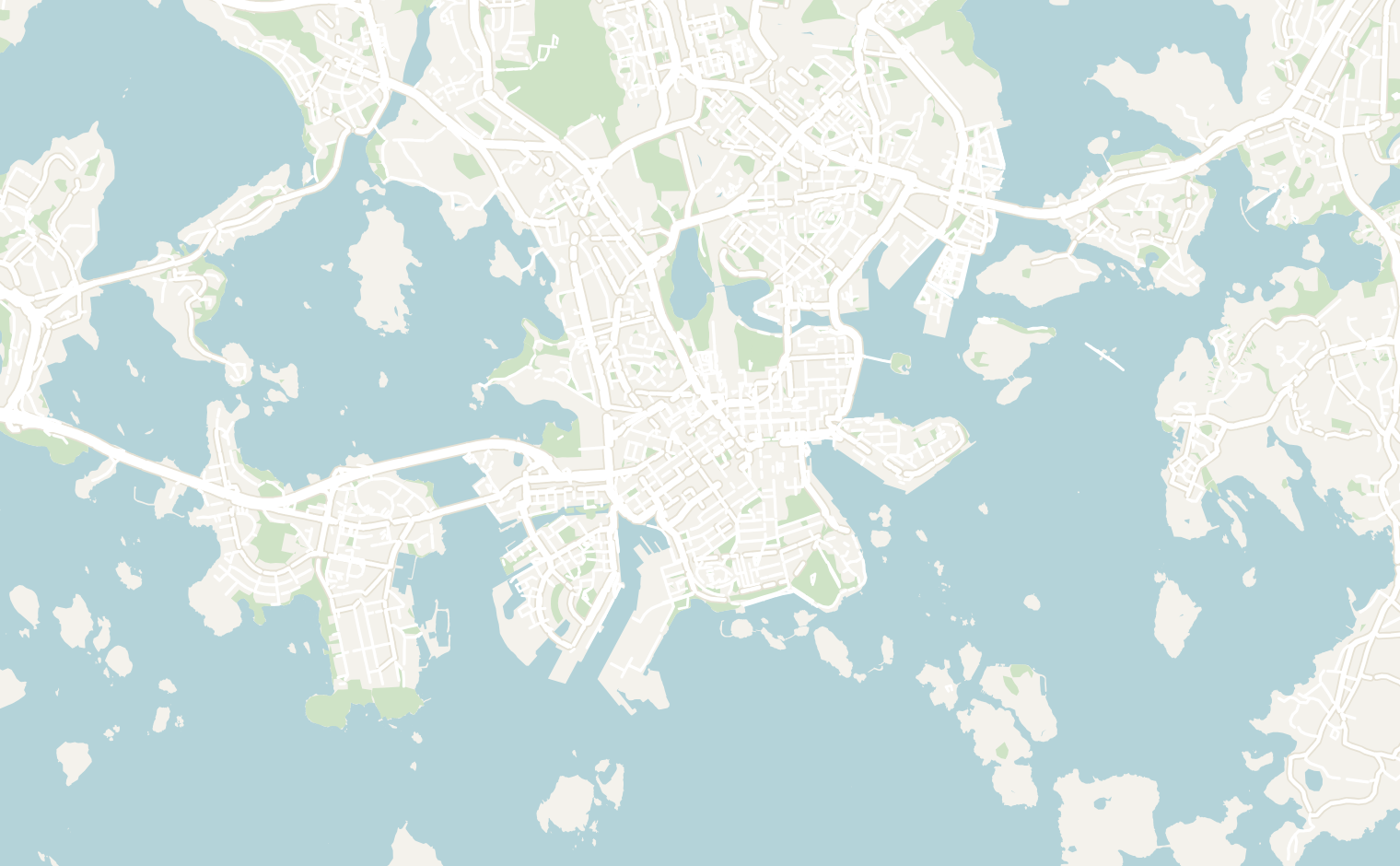
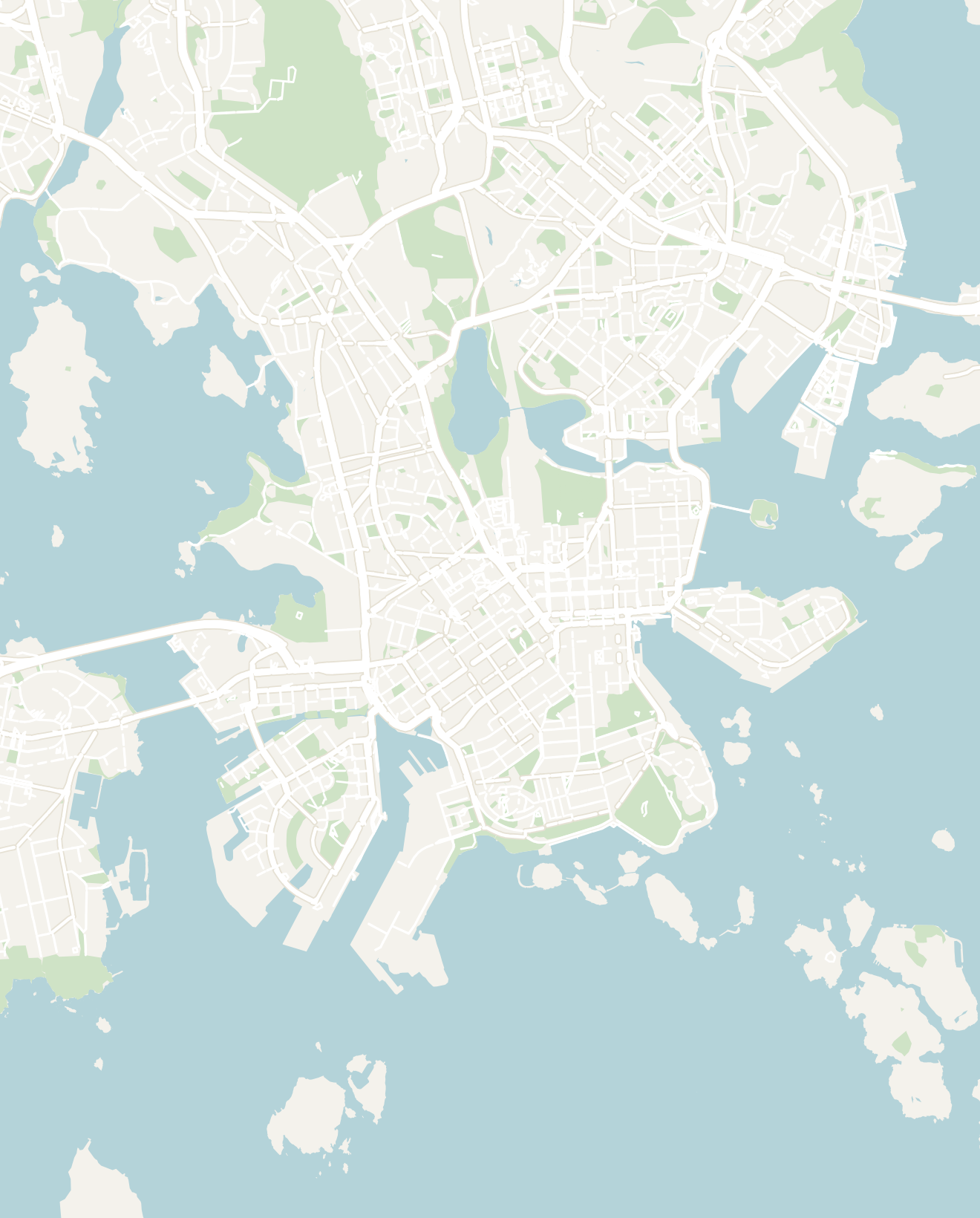
Double-tap to open in Google Maps
Other Places to Consider
If I were to do it again, I would visit more than just Helsinki. Finland's real magic is in the far north and on the water:
- Lapland — the Arctic north is a whole different Finland reached by an overnight train or a short flight. Rovaniemi, on the Arctic Circle, is the main city and gateway. In the winter, you can experience northern lights, husky and reindeer sledding, snowmobiling and nights in glass igloos. It is also the "official" hometown of Santa Claus, with a year-round Santa Claus Village. If you visit during the summer, you'll experience the midnight sun and endless daylight
- The Finnish Lakeland — the vast maze of forest and interlinked lakes around Saimaa in the east, the classic Finnish summer escape. Every summer Finns head out to the Lakeland for two things: the mökki (a simple lakeside cabin) and the sauna
- Turku & the Archipelago — a couple of hours from Helsinki by train, Turku is the former capital on the southwest coast, a relaxed river city with a medieval castle and cathedral. Its real draw is as the gateway to the Turku archipelago, one of the largest in the world: thousands of rocky, forested islands you can explore on the ferries by car or bike, hopping between tiny island villages