 Europe
 Americas
 Asia
Asia Africa
 Oceania
Overview
Exploring the Orgov Observatory (also known as ROT-54) was one of my favorite things I've done anywhere, and hands down the best thing I did in Armenia. The experience felt like walking through a 1980s Soviet time capsule that had been untouched ever since it was abandoned, the perfect mix of nostalgia and adventure.
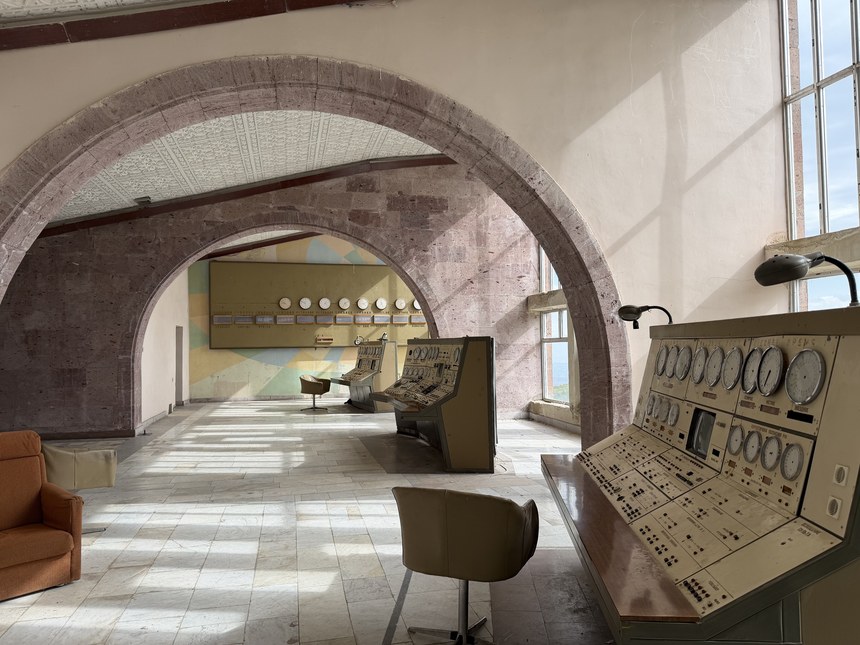
Orgov Observatory is a Soviet complex built to listen to deep space: a dish 177 feet across set into the hillside, with control rooms scattered around it. It was designed by the Armenian physicist Paris Herouni and finished in 1985, then abandoned when the USSR collapsed a few years later. The facility has not been used since, but there is always talk of the government restarting it.
As a visitor, you're free to roam around: nothing is roped off and there were maybe five other people on the whole site while I was there. The facility is completely frozen in time with a variety of strange objects lying untouched as if the place was abandoned yesterday. The best part was exploring freely: climbing on the old telescopes and finding Soviet control consoles, triangular glass paneling and even a piano.
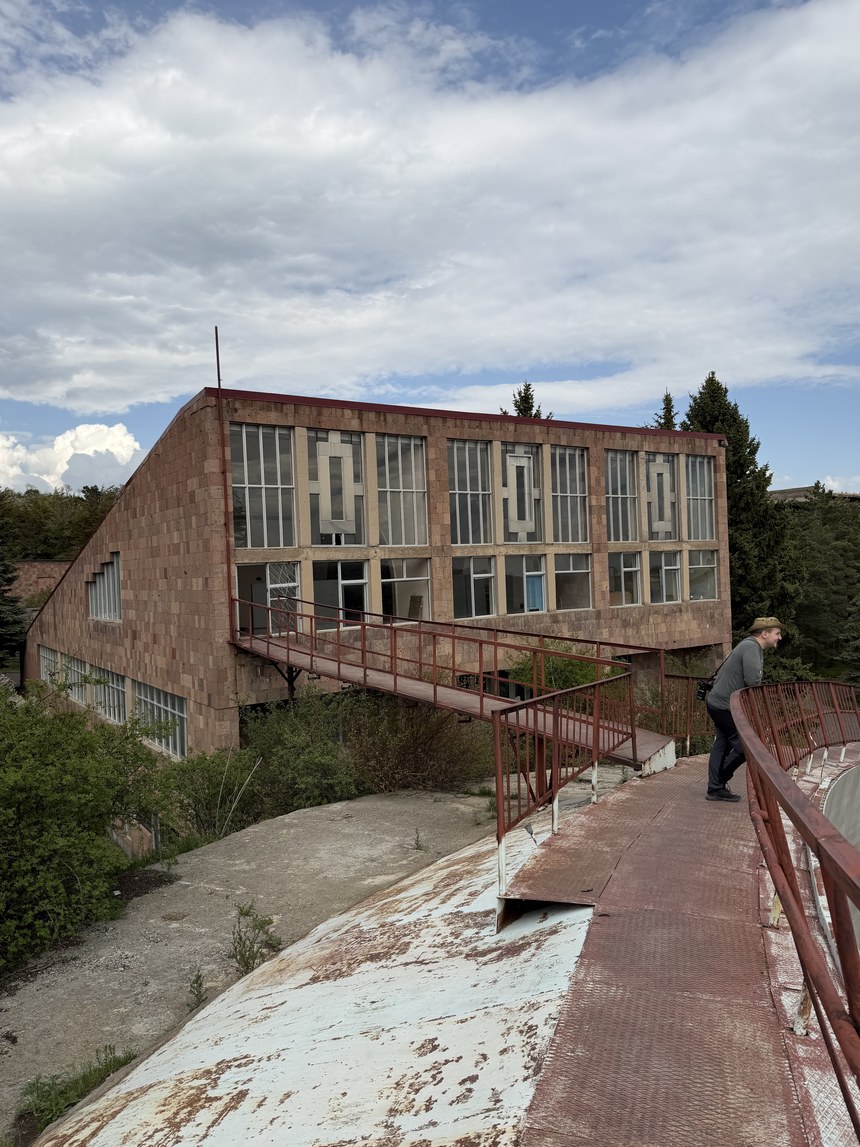
To visit the observatory, you technically need a government permit, bought in person in Yerevan. However, most people I met just paid the guards at the gate about 2,000 AMD (about $5) each and drove in. They were quite enthusiastic to take our payment!
The observatory is only 60 minutes away from downtown Yerevan. It is remote, though, and not reachable by public transit. A visit to ROT-54 only takes 2 to 3 hours total. I'd recommend pairing it with a few other stops to fill the day, and I've added some ideas in a section at the end of the article. Here are the best ways to visit:
- Renting a car — this option provides you with the most flexibility to explore and add on more stops. Renting a car in Yerevan is affordable: an economy car runs about $30 to $40 a day
- Private tour — Armenian Explorer, a local guide who runs urbex tours of Armenia's abandoned Soviet sites, offers this one for 60,000 AMD (about $150). He also does custom tours; reach him on WhatsApp or through his website
- Ridesharing — you can easily call a Yandex Go from Yerevan. However, make sure to arrange the return trip with the driver because it might be hard to get a ride back from there
The Experience
The journey starts with an hour's drive west of Yerevan. We got off the freeway and ended up on a narrow two-lane mountain road that didn't look like it led anywhere. Just as we started thinking we were lost, small satellite dishes began popping up in the distance and it felt like we were driving toward a secret Soviet base hidden in the slopes of Mount Aragats.
We finally rolled up to a gated compound and there was a group of four Armenian men in plain clothes (the "official guards") smoking cigarettes and hanging out by the entrance. We showed up without the permit we were supposed to have and it wasn't a problem. We offered to pay, they asked for 2,000 each, and that was the entire negotiation. Past the gate, we drove slowly as the track was overgrown and wild boars and cows were randomly wandering in front of our car.
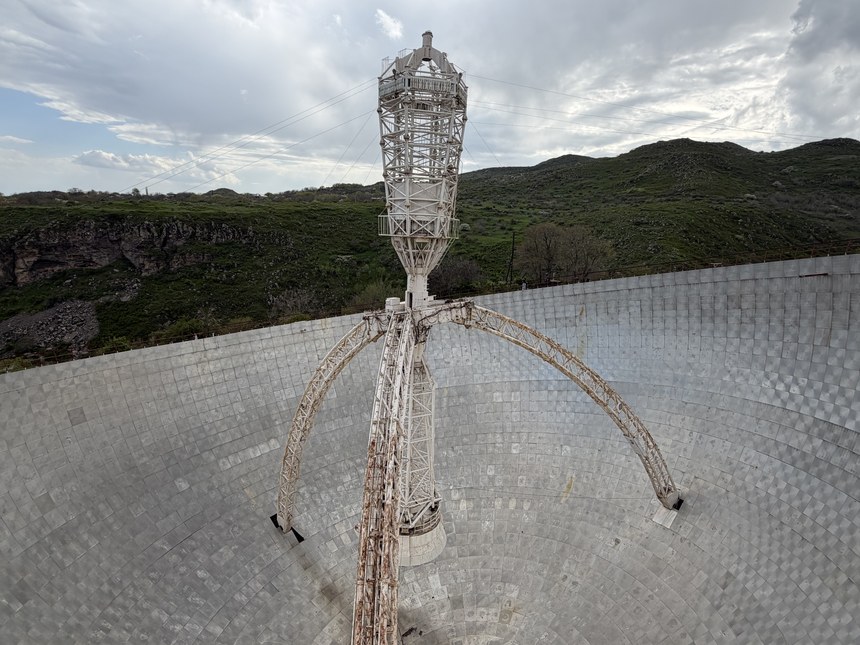
We finally reached the observatory and the massive dish is the first thing you see. It is far bigger than the photos suggest: four or five stories of curved metal with the receiver housing suspended over the middle. The area is completely open and you can walk straight up the bowl. You can walk along the railing around the satellite dish (and our crazy Finnish friend actually climbed through the railing to the top). The huge metal dish almost feels out of place against the green hills behind it.
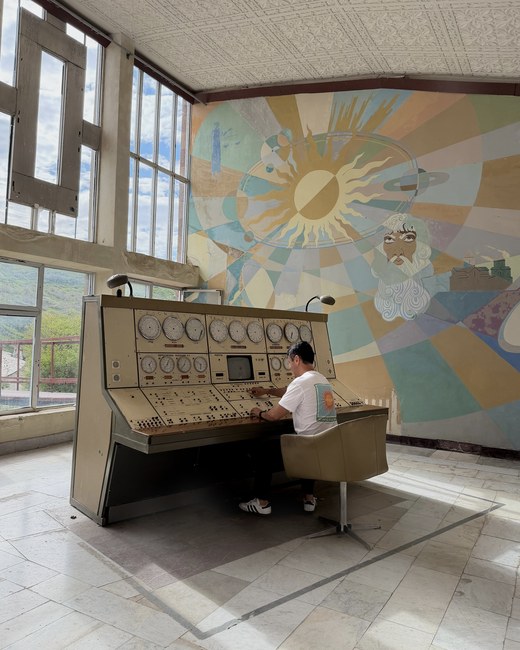
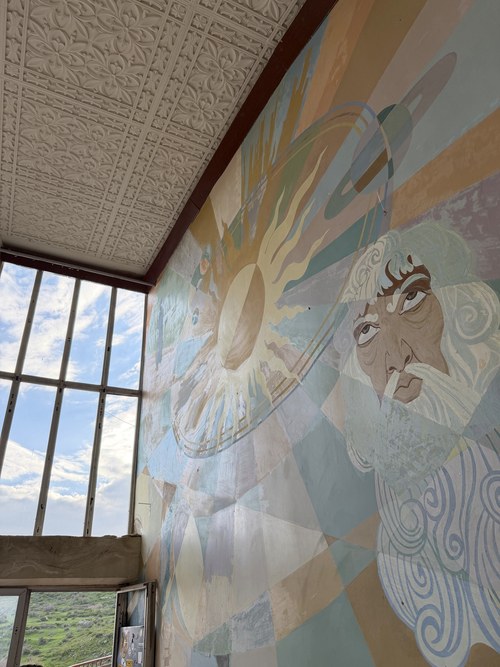
Next we wandered into the control room, which is the real reason to come. It sits in the main building beside the dish, a long room with tall glass windows that fill it with light. Its three control panels still have their original Russian labels, dials and switches.
There was also a beautiful Soviet-era pastel mural painted across one wall and a series of clocks from major world cities across the world on the other. There were no guards around so you can just play with the dials and control panels as much as you like.
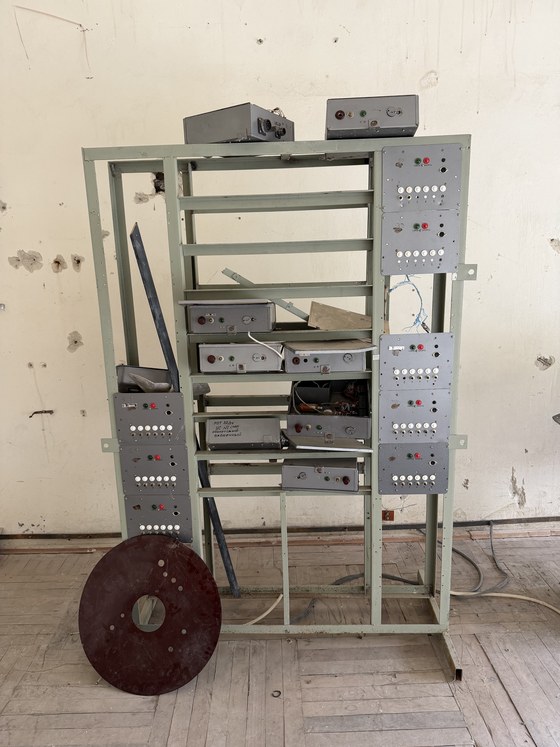
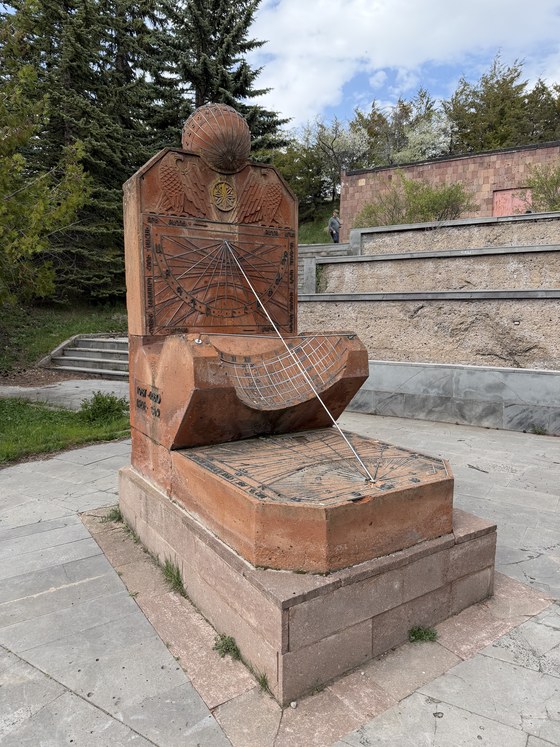
The control room is in far better shape than anything else on the site. We wandered around a few of the other buildings and found more control panels, broken couches, old electrical parts, lots of triangular patterned glass reflector panels and even a piano.
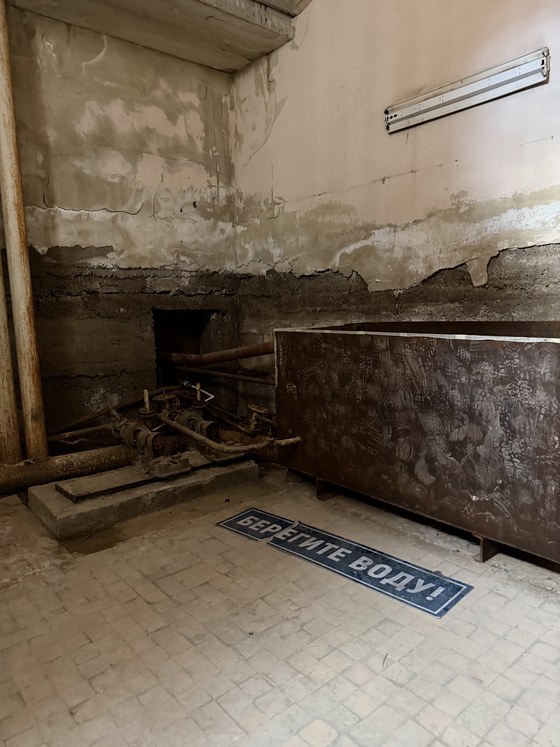
Some of the other rooms were in poor condition with broken glass everywhere, floors giving way, ankle-deep in mud, and what's left is scattered everywhere. Makes sense for a building that has been abandoned for over 35 years...
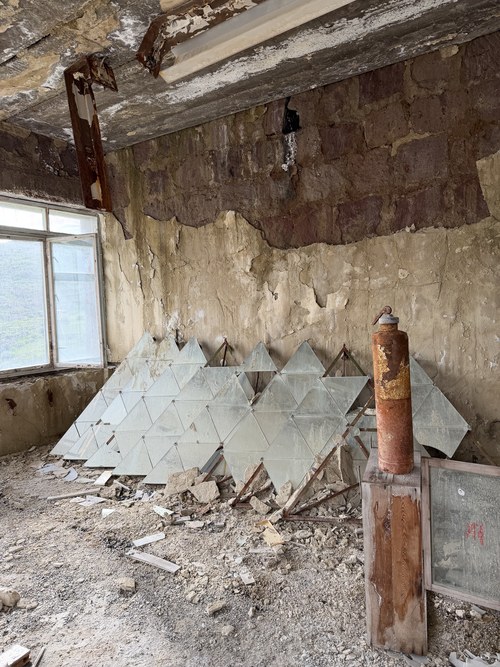
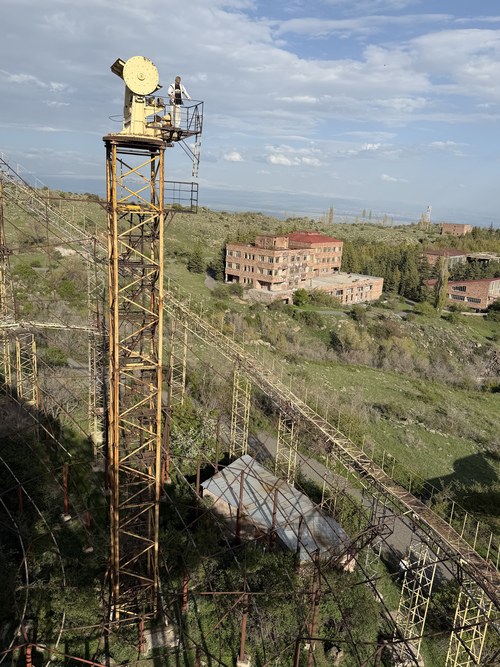
Located right behind the main set of buildings was another tall satellite receiver dish. It seemed to be partially disassembled with glass panels still running down one side. I ended up climbing this satellite dish. It was still unnerving (due to its open rusting frame dozens of feet above the ground), but it seemed more stable than the main dish.
The setting is a big part of it. The place felt like a secret hideout never meant to be found, down an unmarked road in the green hills. From the top of the satellite tower, there was a beautiful view of a wide green valley with a traditional Armenian church visible in the distance. It was a strange contrast between the Soviet space infrastructure rusting in the foreground and a centuries-old church behind it.
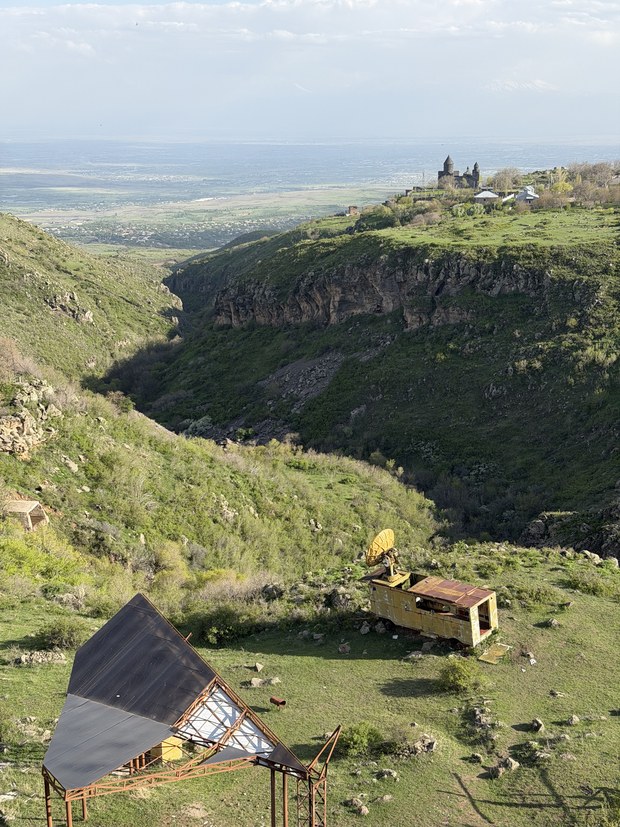
Next to it sits a small rusty green railway car with its own satellite dish bolted to the roof, which was my favorite detail of the place. It seems to randomly be parked in the middle of a green field and you can explore the inside filled with old plastic parts and wiring.
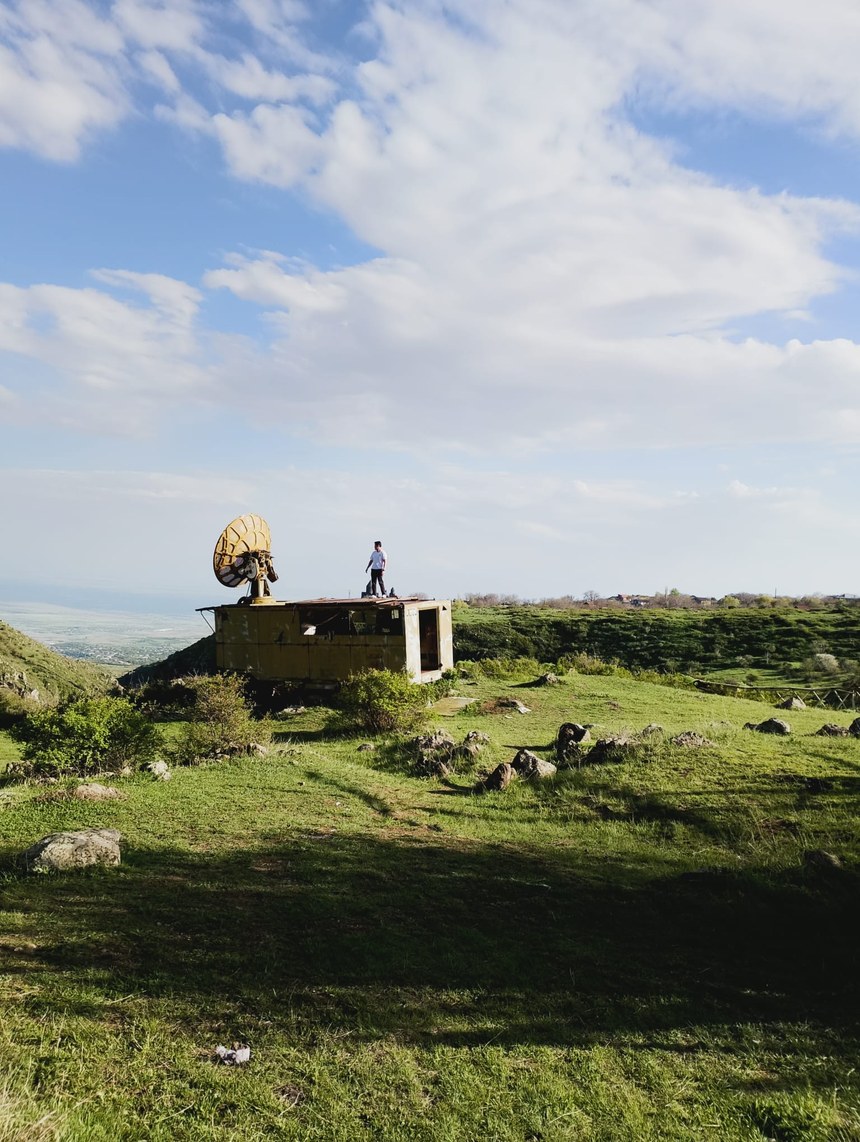
The place feels serene and frozen in time. It is not a typical tourist spot and we only saw a few other people when we were there.
A few practical notes. Wear sturdy closed-toe shoes, because the site is muddy and there is broken glass and scrap metal everywhere. Watch your footing indoors, since some of the floors aren't sound and felt like they were prone to collapsing.
Give it two to three hours on site. There is already talk of restoring the telescope and turning it into an operational facility once again. Go while you still can, because this is a must while visiting Armenia!
More Stops for the Road Trip
Orgov Observatory makes for a great road trip if you have a car. Distances in Armenia are small, so we fit three other stops into the same day.
Here is the loop we drove: we left Yerevan around 10 AM and headed first to the Black Wall and an abandoned Soviet plane, on to Lake Sevan for the monastery and lunch, then back west to the observatory. The drive itself was incredible: deep green valleys, snowcapped mountains in the distance and Soviet monuments on the roadside.
Lake Sevan and Sevanavank Monastery
-mob-2x.jpg)
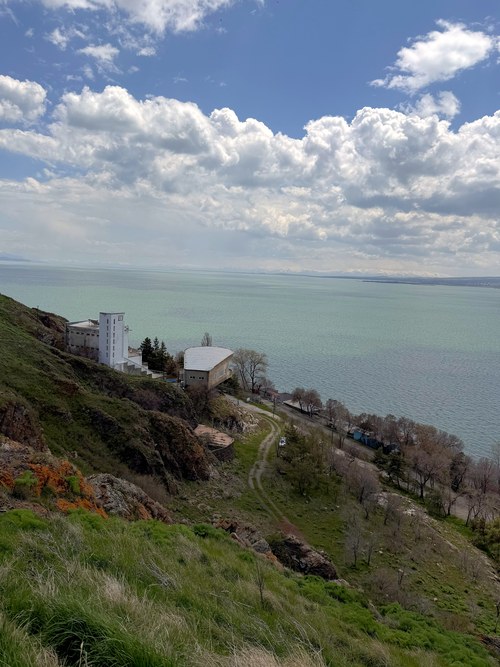
Lake Sevan is the most famous lake in Armenia with bright blue waters and mountains all the way around, located only about 1.5 hours from Yerevan. The road up is lined with vendors offering pomegranate juice, a sour citrus drink and wine samples with no pressure to buy (we bought a bottle of sweet red from an older woman anyway).
The best place to visit the lake is the Sevanavank Monastery on the peninsula. From the top of the monastery's hill you look down on the whole lake and across to the Sevan Writers' House, a Soviet-era retreat where Armenia's writers used to gather. On the monastery steps, there was also a crazy old man who would chase you with a pigeon and try to put it on your shoulder while yelling strange things in Russian! Quite the character!
The Black Wall
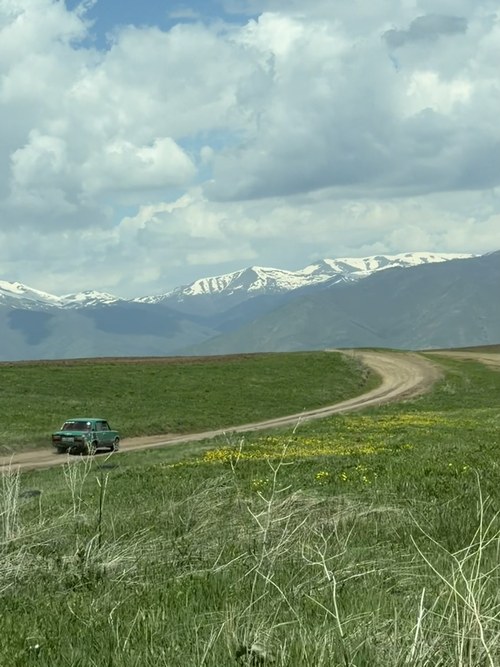
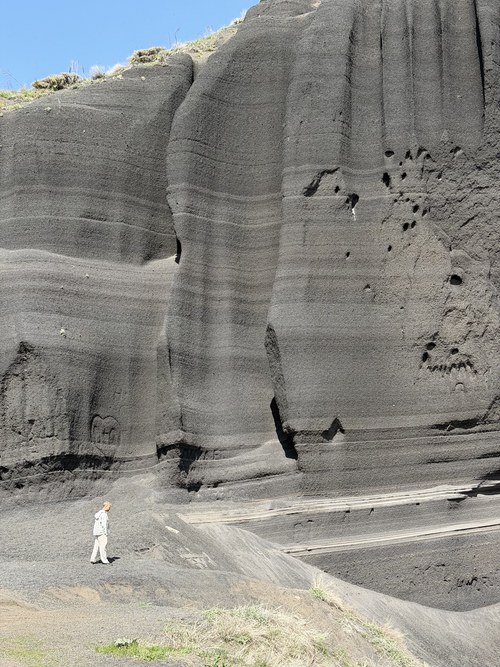
The Black Wall is an abandoned mine site outside a tiny Armenian village filled with Ladas and old men standing beside the road. A dirt road led out of the village through green pasture with white peaks behind it and ended at a site with no signs and no other visitors.
It really was just a huge black wall that used to be a mine. The surroundings are beautiful and it makes a strange photo, but it is a 20-minute stop, so treat it as a detour on the way to Sevan rather than a destination on its own. It is definitely skippable, but getting there was an adventure.
The Abandoned Soviet Plane
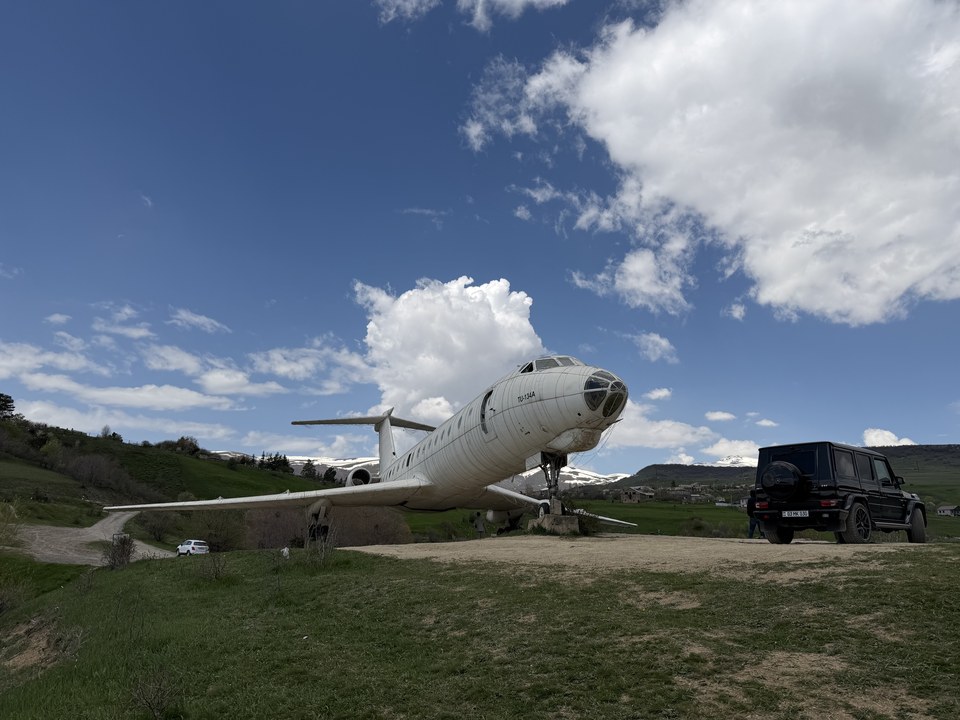
Only twenty minutes farther up the road, a huge abandoned commercial airplane (a Tu-134A) sits on the shore of the Hrazdan Reservoir, strung with Christmas lights, for reasons nobody could explain to us.
It is a real Soviet airliner that somebody trucked here and left beside the water, mountains behind it, and it looks completely out of place. We had the place to ourselves besides an Armenian couple who pulled up next to it in a G-Wagon. You can climb onto it if you're feeling adventurous. One of our group made it onto the roof; I started sliding off the wing and gave up.
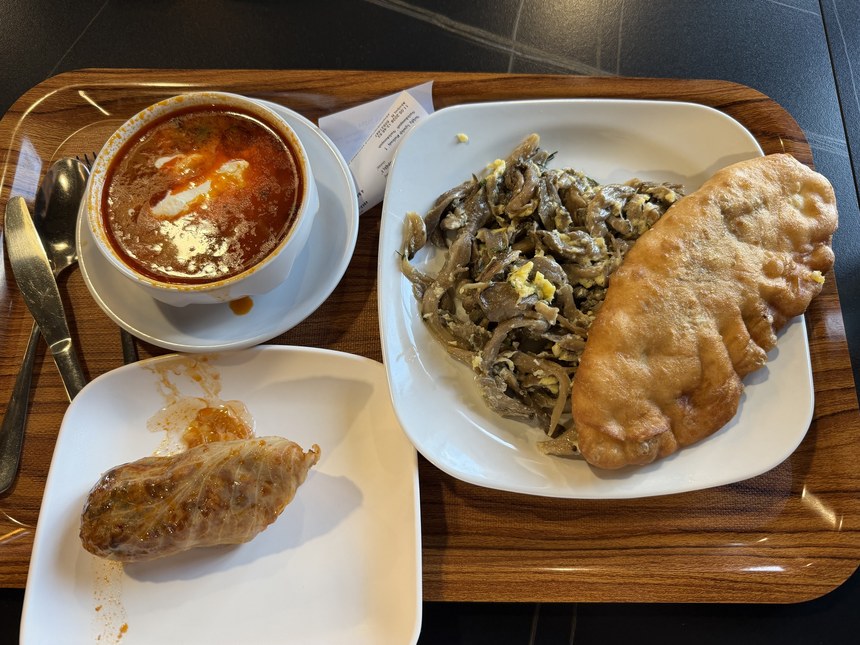
For lunch we stopped at Tsovagyugh Food Court, a popular roadside stop on the north shore of Lake Sevan. It is both a huge supermarket and hot-food bar, serving a variety of Armenian and Russian specialties.
I'll be honest, the food wasn't great, but it was a quick stop and had a lot of variety. I ordered a cabbage sarma, the fried mushrooms that are the house specialty, a deep-fried meat pie and a bowl of solyanka. Tsovagyugh seemed to be a popular spot for Russian tourists.
That's a wrap on one of my most packed days in Armenia: the Orgov Observatory plus three bonus stops. Read my 7-day Armenia itinerary and my Yerevan city guide to plan your upcoming trip to Armenia.