Europe
 Americas
 Asia
Asia Africa
 Oceania
General
Chile is the long, thin country located on the western edge of South America. Stretching over 4,000km long, Chile is home to some of the most diverse terrain from the driest desert on earth to the glaciers of Patagonia. It is also the safest and one of the most developed country in Latin America.
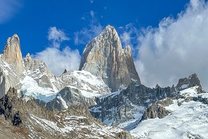
The main reason to come is the Patagonia region in the far South: Torres del Paine and its legendary W Trek are among the best hiking on the continent. I would recommend spending 1.5 to 2 weeks in Chilean Patagonia and combining it with the Argentinean side of Patagonia. You'll likely stop by the capital Santiago which is good to explore for 1 to 2 days.
- Getting around
- Flights — the country is enormous and long, so flying between regions is the most efficient way to get around. All flights to Chile go through Santiago
- For Patagonia, you can fly to Punta Arenas which is cheaper and further south or Puerto Natales which is closer to Torres del Paine National Park
- Rent a car — the Patagonia region is one of most sparsely populated regions of the world. Roads are wide and have almost no traffic so it is very easy to drive here. Having a car gives you the flexibility to stop at viewpoints and manage your schedule
- Buses & shuttles — in Patagonia, regular long-distance buses linking major cities Punta Arenas, Puerto Natales and the Torres del Paine trailheads. The distances are big, so plan travel days between the cities
- Money — the official currency of Chile is the Chilean Peso (CLP). Chile is expensive by South American standards, but particularly the Patagonia region is one of the most expensive regions I've traveled to. Outdoor gear and restaurants are close to U.S. prices, so budget accordingly
- Language — Spanish is the official language, but English is much more widely spoken than in the rest of South America. Expect everyone in the Patagonia region to speak English
- Climate — the weather in Chile varies significantly depending on the region. The country is in the southern hemisphere so seasons are opposite of the southern hemisphere's. Santiago has a milder South American climate
- Since Patagonia is so far south, the weather is quite unpredictable, never following forecasts and changing multiple times throughout the day. Plan your trip during the short Patagonian summer from December to February. Even in the summer, the weather can be rainy, cold and fiercely windy (with winds of 60 to 100 mph (100 to 160 km/h)). Come prepared with real layers
- Food — Chilean food is very similar to the more famous Argentinean food. It is hearty and heavy. You'll have a lot of steaks, empanadas, wine and try the Patagonian calafate sour, (similar to a pisco sour made with local berries). In the south, the food is more seafood-heavy with fresh fish and king crab
Punta Arenas
1–2 days recommendedPunta Arenas is one of the southernmost cities in the world and is a popular gateway to both Chilean Patagonia and Antarctica. It is commonly the departure point for voyages to Antarctica.
The town is eerily quiet for a city of over 100,000 people. It felt very sparse and had an odd end-of-the-world feel. I would spend 1 to 2 days to see penguins and what life is like at the end of the world. However, I found the town quite boring even after the first day.
- Tierra del Fuego Day Tour — visit the southernmost province in the world and see some penguins! If I only had one day in Punta Arenas, this is the activity that I would do:
- The tour starts with a ferry across the strait to the island of Tierra del Fuego. Even in March when I went, it was freezing cold and hard to stand outside in the morning. On the crossing, you'll likely see the black dolphins unique to this part of the world and whales spouting along the coast
- Pingüinos del Rey Park — the highlight of this tour was seeing a wild colony of around 120 king penguins which are the second largest species after the emperor penguins. There were orange-and-yellow necked adults and enormous fluffy brown chicks, mostly just standing around. We got to see them from a viewpoint about 400 meters away
- Tour to Magdalena & Marta Island — an alternative tour is to Magdalena & Marta Island where you can see little Magellanic penguins and sea lions. There is less travel time on this tour and going back, I would likely do this tour instead
- The tour ends in Porvenir, a strangely deserted fishing village of 5,000 people. It is dotted with colorful wooden houses and is surprising home to a large Croatian population that immigrated to this area in the late 19th century. It is a great place to learn about the indigenous Selk'nam people who used to cover themselves in whale fat to stay warm and faced a dark chapter during colonization
- Plaza de Armas & the Esplanade — a very European square of white cobblestone and bronze statues. Walk down to the Esplanade overlooking the Strait of Magellan
- Punta Arenas Cemetery — yes, one of the most exciting things to do in this town is visit the cemetery... It is home to has a grand, Italian-style filled with huge family mausoleums and elaborate stone sculptures which makes it one of the more beautiful cemeteries
- Museo Regional de Magallanes & Museo Maggiorino Borgatello — the Patagonia region has a distinct history from the rest of Chile. These are some museums worth exploring to learn about the history if you have extra time
- Restaurant Estilo Magallánico — this may have been the highlight of Punta Arenas. It is an upscale steak restaurant in town. I ordered little cilantro-mayo buns to start and had a juicy sirloin steak with Papas Diablas (cheesy potato wedges with bacon). It was a large meal for around $30, pricey for Chile, reasonable by home standards
- Hostal Chiloe — a very basic hostel located in the center of town. I met some interesting travelers here with people who just came back from Antarctica or on month long cycling tours around Patagonia


Double-tap to open in Google Maps
Puerto Natales
1–2 days · base for the W TrekLocated about 3 hours north of Punta Arenas, Puerto Natales is the staging town for Torres del Paine. I preferred Puerto Natales over Punta Arenas as it was a lot more lively and had a better feel.
I basically spent a day in here before the W Trek (getting ready) and after (recovering from the Trek). I would recommend spending a similar amount of time, 1 to 2 days, here and prioritizing spending time in Torres del Paine National Park.
- Gear up — it is very cold and windy in Patagonia. I was on a longer trip 4 month in South America and completely underestimated the weather here so I had to buy additional gear just for Patagonia. There are tons of outdoor shops here that carry high quality outdoor brands at similar prices to back at home. Make sure you buy or rent all the gear: gloves, a buff, waterproof pants, a down jacket and crampons.
- Here are some outdoor shops that I stopped by: Volkanica Outdoors and Turismo Anita
- Municipal Historical Museum — a small museum that comprehensively covers the history of the Patagonia region. This was the best museum in Patagonia in my opinion
- El Brisket — an amazing restaurant with really good soup, brisket, salad and a calafate sour (a pisco sour with local Calafate berries in it)
- Garden Domes — you have a choice between hexagonal style domes and private cabins overlooking the valley and waterfront. The cabin is very cozy and comes with two bedrooms, a kitchenette, big windows and a hot tub. One of the best places that I've stayed and the hot tub feels incredible after the W Trek
- Last Hope Hostel — a great comfortable hostel to stay at in town. It was very social and full of people who either finished the W Trek or were starting the O Trek
Torres del Paine — W Trek
3 days guided · ~53 milesHands down, one of the most impressive hikes I've done in the world. You cross through three completely different landscapes in Torres del Paine National Park.
Book in advance as there is very high demand for the W Trek and the longer O Trek that follows a similar route. I booked last minute so there weren't many options. I ended up doing an expedited version of the W Trek which squeezes 4 to 5 days of hiking into just 3 days. It is intended for people who are short on time and are open to a more intense experience, but I really enjoyed it! I booked through ChileTour Patagonia and worked with an operator named Gonzalo. The housing, food and logistics were all impeccably planned.
A few general tips to help you be prepared for the hike:
- Bring proper hiking boots with ankle support. The trails can get very muddy and the biggest mistake is not bringing proper footwear. Walking sticks are also very popular option
- If there's been recent snow, you'll need crampons. Rent them in town or confirm in advance that your company is providing them. I was unlucky with the first day of snowfall in the season and the trails were treacherous without cramp ons
- Weather is extremely unpredictable even within the same day. Book during the summer and bring many layers that can you can take on and off during the day. Winds can be extremely high and hikers die every year. Take it seriously and follow safety precautions for high winds
- The sunrises are the most beautiful that I have seen anywhere in the world. The sky glows a bright orange and purple color (like the Patagonia brand logo) so don't miss it! The sunrises pretty late around ~6:30AM to 7AM so make sure you wake up early to catch it
Here was the itinerary for my expedited W Trek tour. We hiked the entire W Trek in just 3 days (~70km or 43 miles). It is a great option for those short on time, but I would recommend choosing a longer option since doing the hike in 3 days felt very rushed. The tour also includes an arrival day with a dinner as well as one night back in Puerto Natales, making the total trip 5 days long. As a solo traveler, it was also great to have a group to hike with and logistics planned in advance.
- Arrive to Puerto Natales and check into the accommodation for the night at Garden Domes. Settle into your lodging and use the afternoon to explore town. The tour leader does an evening briefing that walks through each day's route in great detail on a map. There are not many different trails so it is actually very hard to get lost in Torres del Paine National Park. It is followed by a welcome dinner where you get to meet the others on the trip. Rest up, because the next three days are long
- The day starts with a drive to Refugio Chileno. In the parking lot, we saw quite a few guanacos, the wild llamas native to Patagonia. The first day is guided with a local hiking tour guide who does the exact same hike every day. You walk along the river through a pine forest, then up steep, wet granite. Snow came down as we climbed so the final section was icy and sketchy without crampons.
- The reward on the first day was the three iconic rock pillars (Las Torres) that tower over the bright-turquoise, Laguna Torre. If you're lucky, you'll get a clear view. However, due to the high elevation, there is constantly fog blowing over the towers so take your photos the instant the sky opens: ours closed again within two minutes
- The rest of the day is spent hiking back the same way to return to Refugio Chileno. The accommodation for the night was a small cabin with an amazing view of the towers in the distance. Our cabin was located next to Estancia Laguna Amarga, a grassy field with highest concentrations of Pumas in the world! Pumas are notoriously hard to track down and we weren't lucky enough to see one ourselves
- Billed as the "easy" day due to the lack of elevation, but actually the longest. We started with a hike through a foggy valley between two mountains, past waterfalls and then to Lago Grey. It is home to the enormous Grey Glacier: a perfectly straight wall with spiky blue tops, and floating icebergs glowing blue from trapped air. There wasn't a single other hiker when we were there so we had it all to ourselves. This day was a bit of a rushed day trying to get to Grey Glacier before it closes at 3pm and trying to get back to camp before it was dark
- We finished the hike around 5pm. Our accommodation was pre-set camp at Refugio Paine Grande on the lake. At night, the mix of wind, cold and rain while camping outside in a tent was freezing. There is an option to stay indoors in a dorm at Refugio Paine Grande if you want to be more comfortable. The Refugio offers a buffet dinner. The food isn't great, but anything tasted amazing after a second full day of hiking
- The highlight of the trip was the sunrise which glows a bright orange color over the lake with the mountains in the backdrop. The sunrises later in the deep Southern Hemisphere so wake up around 6:30AM or 7AM to catch it
- Take the morning easy and grab breakfast from the Refugio Paine Grande. Then head out on the hike for the day: It starts with an easy flat first half through an eerie, beautiful valley of dead trees, then a long suspension bridge and a steep climb to the French Valley lookout and Mirador Británico. There glaciers on both sides with avalanches happening every 15 minutes (which sounds like a cannon being fired) and the iconic flat Torres in the background
- We stopped at Mirador Británico and hiked back to Campamento Italiano. Here you catch the last ferry for the day at 5:30pm across Lago Pehoé. It is a beautiful ride and takes 45 minutes to get to a stop Pudeto. We then took a 2 hour bus back to back to Puerto Natales to spend the night and had a final goodbye dinner
- The trip ends with a final breakfast at Garden Domes. I had one final day in Puerto Natales, mostly spent recovering from the long days of hiking. I also decided to explore the town a bit and saw the Plaza de Armas and its cathedral, and walked the lakefront for sunset. Walk out to the old broken pier named Muelle Braun & Blanchard for the classic Puerto Natales photo spot
From here, you can continue on to the Argentinian side of Patagonia. From a logistics standpoint, it makes sense to cross the border from Puerto Natales to El Calafate (roughly 4 hours by bus) and do the entire Patagonia region in one trip. Read my field notes on El Calafate and El Chaltén here.
Santiago
1–2 days recommendedYou'll likely fly through Santiago the capital of Chile if you're visiting the country. I was told not to spend much time here by other travelers and even many Chileans I met. Santiago is a bit more run-down and lacks as many historical sites compared to other South American capitals. However, I thought it was a decent stop for a day or two to check out the capital of Chile on my way back from Patagonia.
- Cerro Santa Lucía — the highlight of Santiago was Cerro Santa Lucía, a lush, green hilltop park in the middle of the city. It is worth exploring for a couple of hours to see the castle ruins, winding stone stairs, fountains and viewpoints
- The Terraza Neptuno at the top is the most beautiful part with a two-story fountain with statue of the Roman god Neptune. The fountain likes under palm trees and a huge Chilean flag and felt very European
- Plaza de Armas & Catedral Metropolitana — the historic heart of Santiago, founded by Spanish conquistador Pedro de Valdivia in 1541. The square is a lively open space ringed by colonial-era buildings, street performers, chess players and vendors. One of the few remaining historical parts of Santiago
- Centro Cultural la Moneda (CCM) — a large underground cultural center directly beneath La Moneda Palace. Hosts rotating international exhibitions across two main gallery halls and the National Film Archive
- La Moneda Palace — the grand neoclassical presidential palace that takes up an entire city block in the center of Santiago, originally built as a colonial mint in 1784. The courtyard is open to the public and the changing of the guard takes place on the forecourt every other day. The walk over from Plaza de Armas passes a colorful pedestrian art street called Paseo Bandera lined with murals
- Barrio Italia & Barrio Lastarria — two walkable neighborhoods full of cafés and restaurants if you have extra time
- Park Plaza Apart Hotel — a small boutique hotel located in the heart of downtown Santiago. I booked a loft apartment for ~$50 USD which was a great value for the space


Double-tap to open in Google Maps
Other Places to Consider
My last trip to Chile was most focused on Patagonia, but Chile stretches across almost every climate on earth. Here are some other locations worth considering:
- Atacama Desert — the driest desert in the world in the far north. Base yourself in the town of San Pedro de Atacama to visit the geysers, salt flats and flamingo lagoons. There is some of best stargazing here and the photos online look unreal
- Easter Island (Rapa Nui) — the remote Pacific island that is home to the giant moai statues. It is a five-hour flight from the mainland. I ultimately decided not to visit due to the price and time commitment
- Valparaíso — a colorful, bohemian port city of steep hills, funicular lifts and street art. It is an easy trip from Santiago
- The Lake District — located an 11 hour drive south of Santiago, visit the towns of Pucón and Puerto Varas. The Lake District is home to some impressive volcanoes, lakes and hot springs. This came most recommended by Chileans that I've met on my travels
Explore More