Europe
 Americas
 Asia
Asia Africa
 Oceania
El Salvador is, without any doubt, one of the most underrated destinations in Central America. Once considered one of the most dangerous countries in the world, it has undergone a remarkable transformation, and tourism is only just beginning to catch up.
El Salvador is more than just a safety success story. It packs a remarkable variety of experiences into an incredibly small country. You can drive from end to end in just five hours, yet within that distance you'll find active volcanoes, hidden hot spring waterfalls, colonial highland towns, black-sand surf breaks, and some of the most extraordinary sunsets in Central America. Here are the ten experiences you won't want to miss!
1. Take on the 7 Waterfalls Hike

This is, without question, my favorite experience in all of El Salvador, and one of the best adventure days I've had anywhere on my travels. The 7 Waterfalls Hike is located just 20 minutes outside the town of Juayúa on the Ruta de las Flores and leads you through dense jungle to a series of 7 stunning cascades, each one different in height, force, and character.
The hike itself takes around 3 to 4 hours return and involves river crossings, scrambling and scaling waterfalls, which is all part of the fun. Toward the end of the hike, Los Chorros de la Calera offer pools deep enough to swim in and rocks above to dive from for braver souls. A local tour costs around $15 per person and is well worth it for navigation and safety. Most hostels in Juayúa or Ataco can arrange a guide for you. I wrote more about this adrenaline-filled excursion in my full guide to the 7 Waterfalls Hike.
2. Surf in El Tunco


El Tunco is El Salvador's backpacker surf hub and a small, lively beach town built around a consistent right-hand beach break on a dramatic stretch of black volcanic sand. The waves here are some of the most reliable in Central America, making it equally appealing for complete beginners taking their first lesson and experienced surfers looking for a fast, punchy wave.
The town itself is small enough to walk everywhere in ten minutes, with a string of surf schools, board rentals, beach bars, and hostels strung along the main drag. Lessons run around $30 to 40 for two hours including a board and instructor. If you already surf, board rentals start at $10 per day. Read my full guide to El Tunco here.
3. Hike the Santa Ana Volcano


The Santa Ana Volcano — known locally as Ilamatepec — is the highest active volcano in El Salvador and one of the most rewarding hikes in Central America. The highlight is the crater lake: a vivid turquoise pool sitting in the caldera, its otherworldly color caused by high concentrations of sulfur and volcanic minerals. Steaming fumaroles ring the crater rim and the views across western El Salvador stretch all the way to Guatemala on a clear day.
The hike is around 4.4 miles (7.1 km) return and takes approximately 4 hours. El Salvador requires hikers to be accompanied by a government-approved guide ($4 per person), and guides only depart at set times; plan ahead. Most hostels in Santa Ana can arrange a tour that also includes a stop at Lago de Coatepeque, the deep blue crater lake 45 minutes away. Read more about this hike in my full guide to Santa Ana here.
4. Learn About El Salvador's Recent History with Hector's Walking Tour


Of all the things I did in El Salvador, Hector's Walking Tour in Santa Ana was one of the most unexpectedly eye-opening. Hector is a local guide who has lived through every chapter of El Salvador's recent transformation, from the height of gang violence to the extraordinary change that followed President Bukele's crackdown starting in 2022. He tells it with remarkable candor, balance, and warmth.
Each tour is different depending on the tour group and their specific interests. On my tour, we started in Santa Ana's historic center, made our way to a local coffee shop to sample El Salvador's world class coffee and then made our way to the market to try out local delicacies. Hector layers in the social and political history and you leave with a much richer understanding of why this country is the way it is, and why so many Salvadorans speak about the changes with such complicated, genuine emotion. The tour runs for around 2–3 hours and tip-based, so you pay what you feel it is worth! More details in my Santa Ana guide.
5. Visit the Natural Phenomenon El Salto de Malacatiupán
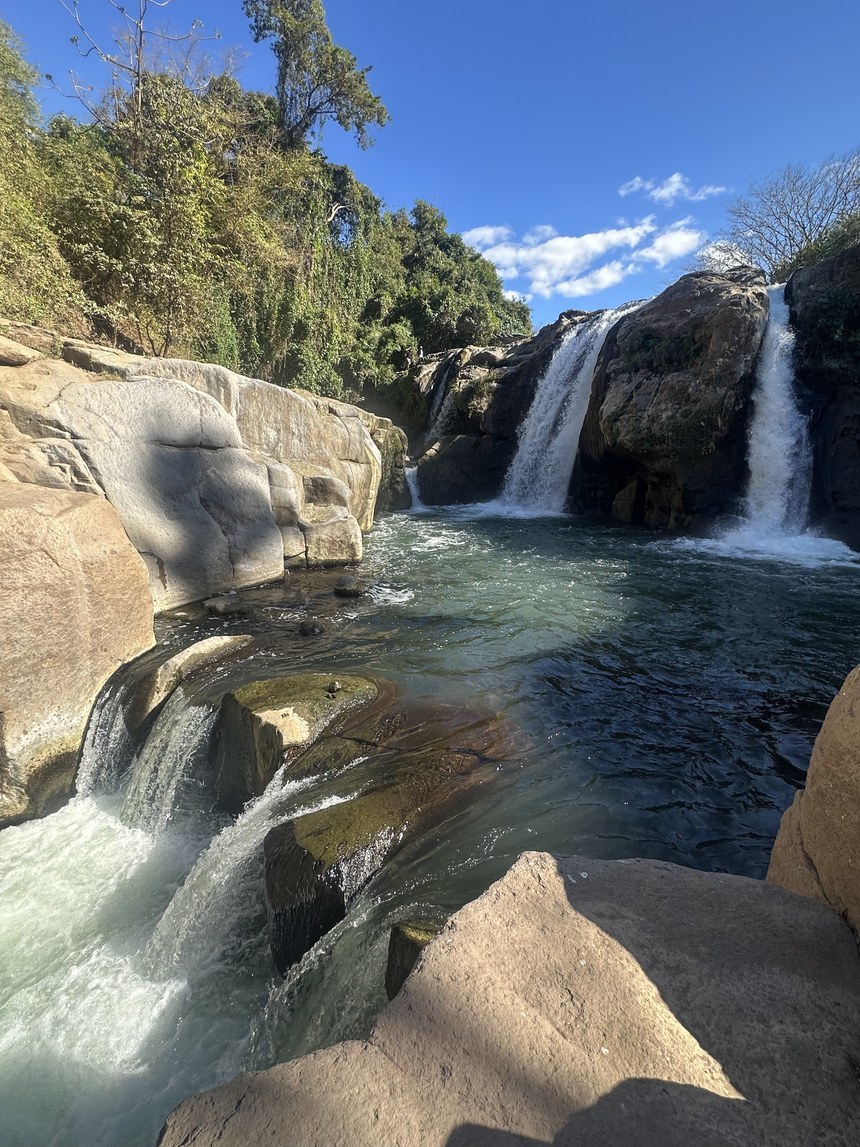
El Salto de Malacatiupán is one of the most unusual natural attractions in Central America, a series of hot spring waterfalls that cascade directly into a river, where you can bathe in pools that reach up to 100°F (37°C). These waterfalls remain largely undiscovered by tourists, feeling less like a tourist attraction and more like a genuine natural wonder that most visitors completely miss.
Located about an hour outside of Santa Ana, the site is best reached by car, Uber, or taxi. Entry is only $1.50 per person. Bring a swimsuit and plan to spend at least two hours here. The combination of swimming, warm water and jungle surroundings makes it easy to lose track of time. More details in my Santa Ana guide.
6. Get Off the Grid in Playa Shalpa


Located less than an hour up the coast from El Tunco, Playa Shalpa lies on an off-the-beaten-path stretch of Pacific coastline. It has none of El Tunco's crowds or noise, a long black-sand beach tucked in a private cove, calm energy, and a small handful of guesthouses tucked into the palms. It's the kind of place where the most pressing decision of the day is whether to sit by the pool or walk down to the water.
Playa Shalpa is perfect for the final days of a trip: somewhere to decompress before flying home, or to simply slow down after a packed itinerary. Given how small El Salvador is, it's easy to combine with El Tunco or to use as a base for a day trip back along the coast. There are no ATMs and limited phone signal, so bring cash and embrace the disconnection. If you want to learn more, please read the section I wrote on Playa Shalpa in my article on El Salvador's Coast.
7. Take a Pupusa Making Class


You haven't been to El Salvador unless you've had a pupusa. There I said it! The pupusa is El Salvador's national dish and cultural symbol. They are thick handmade corn tortillas stuffed with a variety of fillings including cheese, beans, chicharrón, or loroco (a local flower bud). Cooked on a flat griddle, pupusas are served with curtido, a crunchy cabbage slaw fermented in pineapple juice, and tomato salsa. Once you eat your first one, you will understand why Salvadorans are so proud of them.
I would highly recommend joining a Pupusa Making class while in El Salvador. When I did the class at my hostel, Casa Coco, it was so good that I did it twice! Led by the lovely owner of the hostel named Yolanda, we made pupusas completely from scratch with a wide variety of fillings to choose from. The class is offered almost every evening (link to sign up here) and costs $15, complete with music, dancing and a free beer. Don't worry if you're not the best cook; pupusas are hard to mess up! It is one of the most genuinely enjoyable and culturally immersive things you can do in the country. More details are in my full Santa Ana guide here.
8. Ride a Motorcycle Between the Towns of Ruta de las Flores


The Ruta de las Flores is considered the cultural capital of El Salvador. This winding mountain road in El Salvador's western highlands connects five small colonial towns: Nahuizalco, Salcoatitán, Juayúa, Apaneca and Concepción de Ataco. The area around the towns is full of coffee farms, waterfalls and wildflower-covered hillsides. The towns are only 10–15 minutes apart, and the road between them is one of the most scenic in the country. Riding it by motorcycle is simply the best way to experience la Ruta de las Flores.
Several operators in Juayúa and Ataco rent motorbikes for the day for as little as $15 or you can join an organized motorcycle group tour. No prior experience is required for the smaller motorcycles on this route as the roads are very good and there is little traffic. If you're not confident on a motorbike, taking a chicken bus between towns is a solid alternative. Read my full guide to Ruta de las Flores here.
9. Watch a Miraculous Sunset in El Tunco

The sunsets on Central America's Pacific coast are extraordinary and El Salvador is no exception. The combination of the black volcanic sand, the open Pacific horizon and a deep orange glow is magical. During my time on the coast, I never missed an opportunity to watch the sunset.
Fun fact: the town of El Tunco is actually named after the giant black rock located right off the main beach. "El Tunco" is local Salvadoran slang for the pig and the rock is supposed to resemble a pig lying down in the ocean.
The beach fills up naturally around 5PM as surfers paddle in and travelers wander down from their guesthouses. The best viewing spots are from the beach itself or from one of the raised terrace bars that overlook the shore: grab a cold Pilsener or a fresh coconut and settle in. More in my El Tunco guide.
10. Visit the Quirky Cafe Albania


Perched in the highlands above Apaneca on the Ruta de las Flores, Café Albania is one of El Salvador's more unusual attractions: a working coffee farm that has been transformed into an adventure playground. Made famous on social media by the (in)famous rainbow slide, the cafe itself is beautiful: open-air terraces with sweeping mountain views and local coffee grown on the surrounding hillside.
You can choose between a variety of adventure park rides: a gigantic rainbow slide, a tightrope walk in a suspended hamster wheel, a drop swing, a tandem bike along the ridgeline and a huge hedge maze. Entry is free with individual activities costing $1 to $10. It is a great location for families and popular among Salvadorans. More in my Ruta de las Flores guide.
Explore More