 Europe
 Americas
 Asia
Asia Africa
 Oceania
Armenia is one of the most underrated countries I've been to, and I highly suggest you go before more people catch on. The lack of popularity is not for a lack of tourist attractions and I can see the country growing in popularity over the coming years (and it has already been secretly popular among Russians for decades).
Armenia is compact so you'll be able to base yourself in Yerevan and take day trips all over the country, so you can get through most of this list without ever repacking your bag. Everything is relatively affordable so a full-day tour will only run you $15 to $30 and I never stood in a single line. The country is also home to some truly unique experiences ranging from unique natural landmarks to hunting for Soviet relics. These are the ten that stuck with me most from my week there. Be sure to read my dedicated article for each experience if you want more.
1. Explore Orgov Observatory
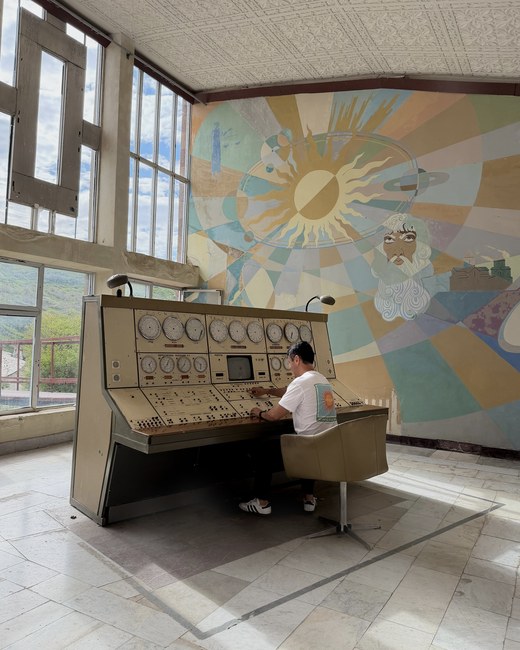
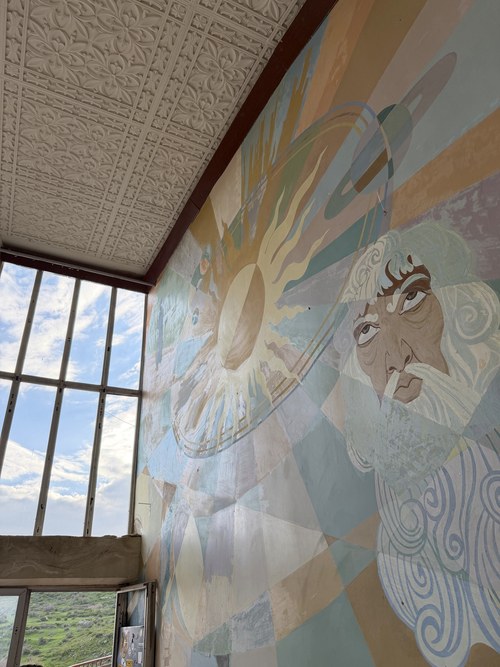
Nothing else I did in Armenia comes close to exploring the abandoned Orgov Observatory, and it ranks near the top of any of my experiences during my travels. The observatory (also known as ROT-54) is a Soviet radio telescope built in a seemingly secret complex stashed away in the hills. It was meant to listen to deep space, then abandoned when the USSR fell apart. It feels like stepping into a 1980s time capsule.
There was barely any security and there were maybe five other people on the whole site. You can roll straight up to the massive dish, climb the second satellite tower and play with the original control consoles under a pastel Soviet mural. You officially need a government permit, but the guards at the gate charged us a small fee each and waved us in. Read my full Orgov Observatory guide for how to get there and what to expect.
2. Climb the Steps of the Cascade
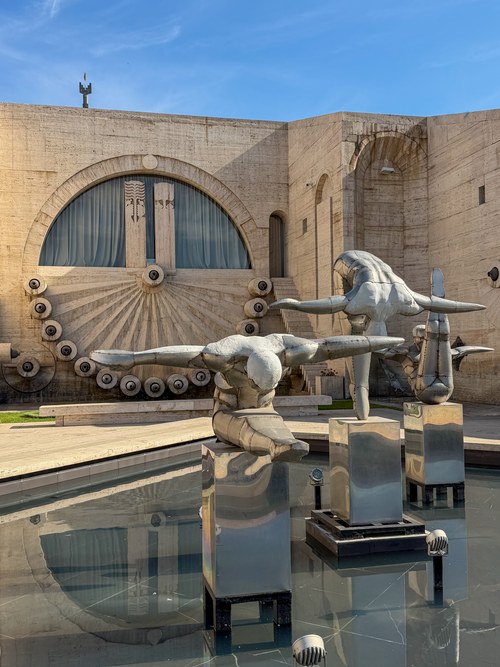
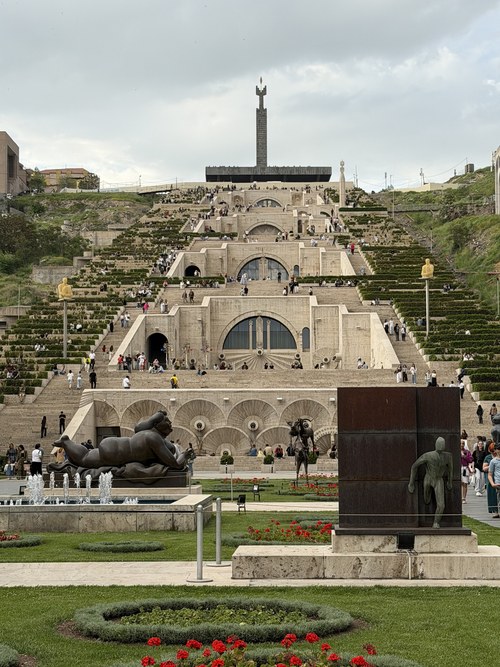
If there is one thing you have to do in Yerevan, it is climbing the Cascade. When you think of Armenia you probably don't think of modern art, but this limestone staircase of 572 steps is one of the best open-air art exhibits I've been to. The sculpture garden at the bottom has Botero's fat bronze cat and Roman warrior, and every terrace on the way up has something new: a wall of round fountains, a half-submerged head and, my favorite, a set of metal divers. There are escalators inside if you're not up for the climb.
At the top you're rewarded with a view of Mount Ararat behind the whole city. Go before noon, when the sky is clearest, or in the evening, when the sculptures are lit up. I enjoyed it so much that I ended up going 3 times. Visit my Yerevan city guide for more highlights of the city.
3. Visit Garni & the Symphony of Stones
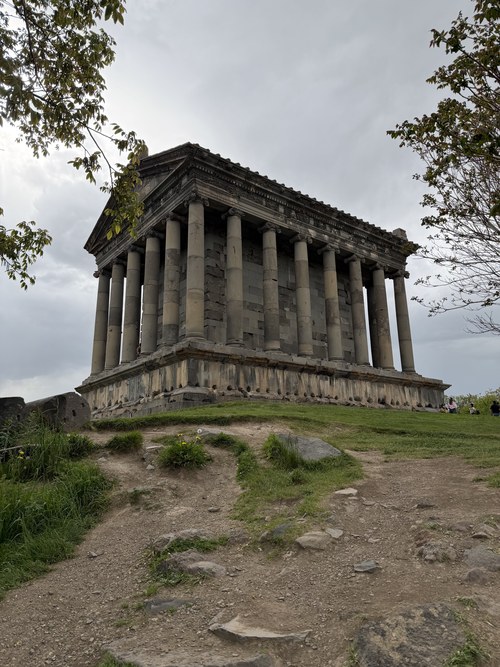
Garni Temple is the last thing you'd expect to find in the Armenian hills: a Greco-Roman temple straight out of Athens, perched on a cliff over a gorge. It was built in 77 AD in dark gray basalt, and the steps are cut extra tall on purpose, so you end up bowing as you climb. Armenia used to have pagan temples like this everywhere, and they were all torn down once the country converted to Christianity. Luckily for us, Garni was spared as the last of its kind, saved by the church built right next to it.
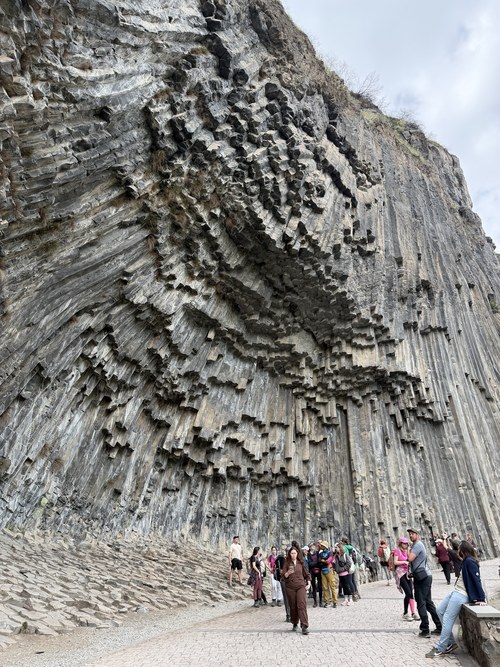
Down in the gorge is the Symphony of Stones, cliffs of six-sided basalt columns stacked five or six stories high, like a giant church organ. A mile-long path follows the river along the bottom, and the surrounding environment is lush and green.
4. See Khor Virap & Geghard Monastery
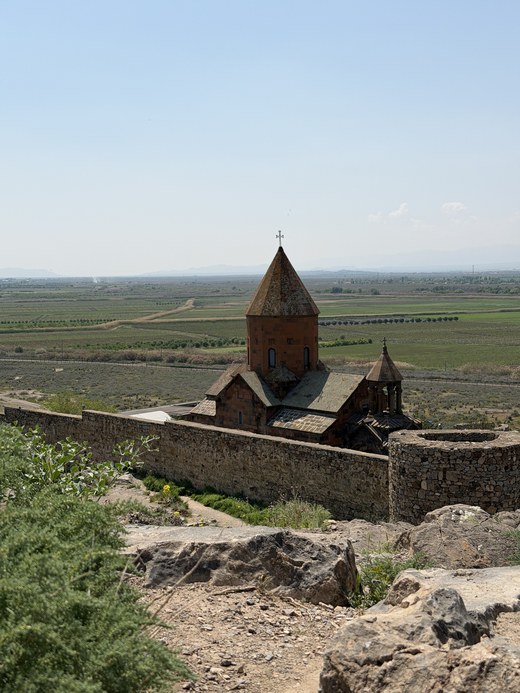
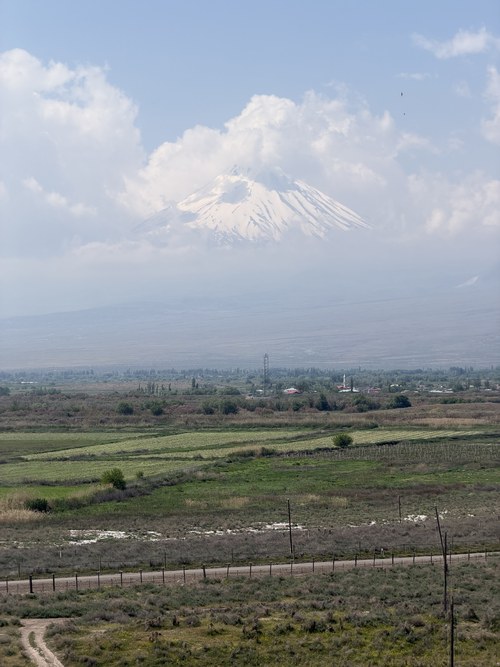
On the same day tour as Garni and the Symphony of Stones, you'll also get the opportunity to visit two of Armenia's oldest monasteries, with roots going back to the 4th century. Khor Virap is the image of Armenia you've probably already seen: one small walled monastery on an open plain, with Mount Ararat towering behind it. Once you have your photos, step into the dark, minimalistic church and down the ladder into the pit where Gregory the Illuminator was held for 13 years before he converted the king and made Armenia the world's first Christian country in 301 AD.
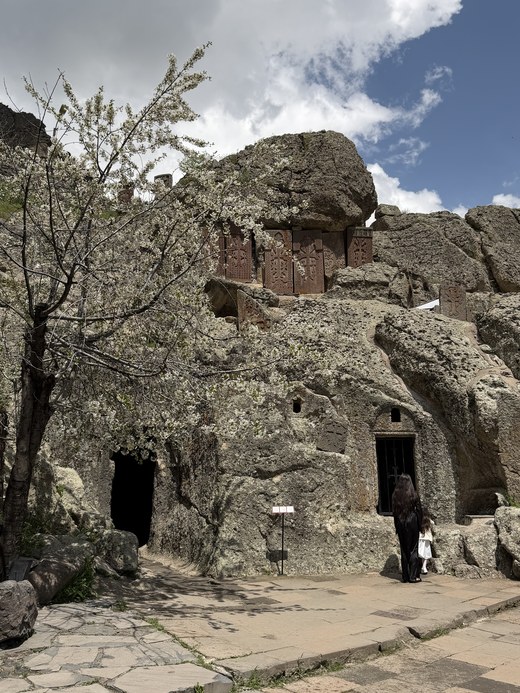
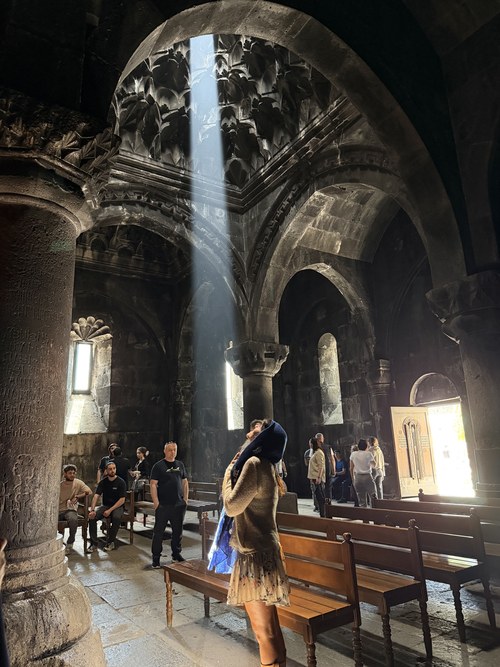
Of all the monasteries I saw, Geghard is the one I'd go back to (yes, I picked a favorite Armenian monastery). Half of the monastery is built and the other half is hollowed out of the mountain, so you step from the sunlight into pitch-black stone rooms lit by one beam from a hole in the ceiling and natural spring water running through the rock. There is a whole network of tunnels you can spend your time exploring at Geghard and the surrounding nature was stunning. Both monasteries are on the classic day tour with Garni and the Symphony of Stones, and my full-day Monastery Tour guide walks through the whole route.
5. Take a Walking Tour in Yerevan
This is the best way to get oriented after landing in Yerevan. Armenian history is long, dark and layered, and the free walking tours in Yerevan are run by locals who are knowledgeable and willing to discuss it. I booked a walking tour on GuruWalk with a guide named Ioanna, who covered over 2,000 years of history, from the first Christian kingdom through the Soviet decades and the genocide all the way up to life today, and answered every question honestly.
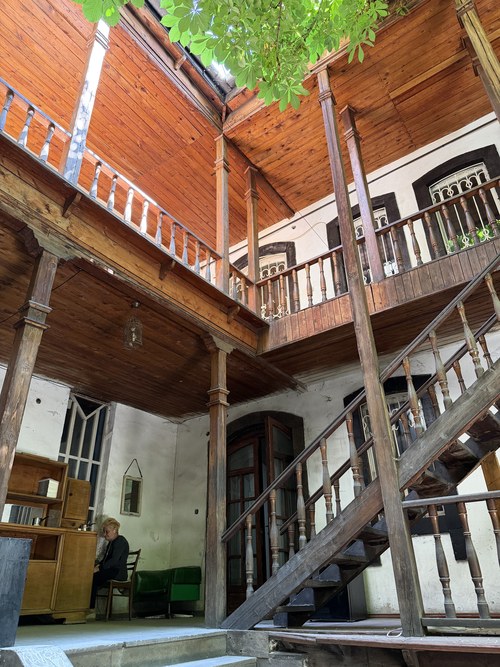
She also took us through doors you'd never open on your own, into the courtyards tucked behind the stately buildings on Abovyan Street, where galleries and cafes have set up shop. She was frank about the challenges of life in Armenia: minimum wage is around $200 a month, which is why so many Armenians leave to work abroad to send money home. We finished at Anteb Restaurant over a spread of local dishes, the best primer I had on what to order for the rest of the trip. It's tip-based, so bring cash and tip well.
6. See More Churches in Gyumri
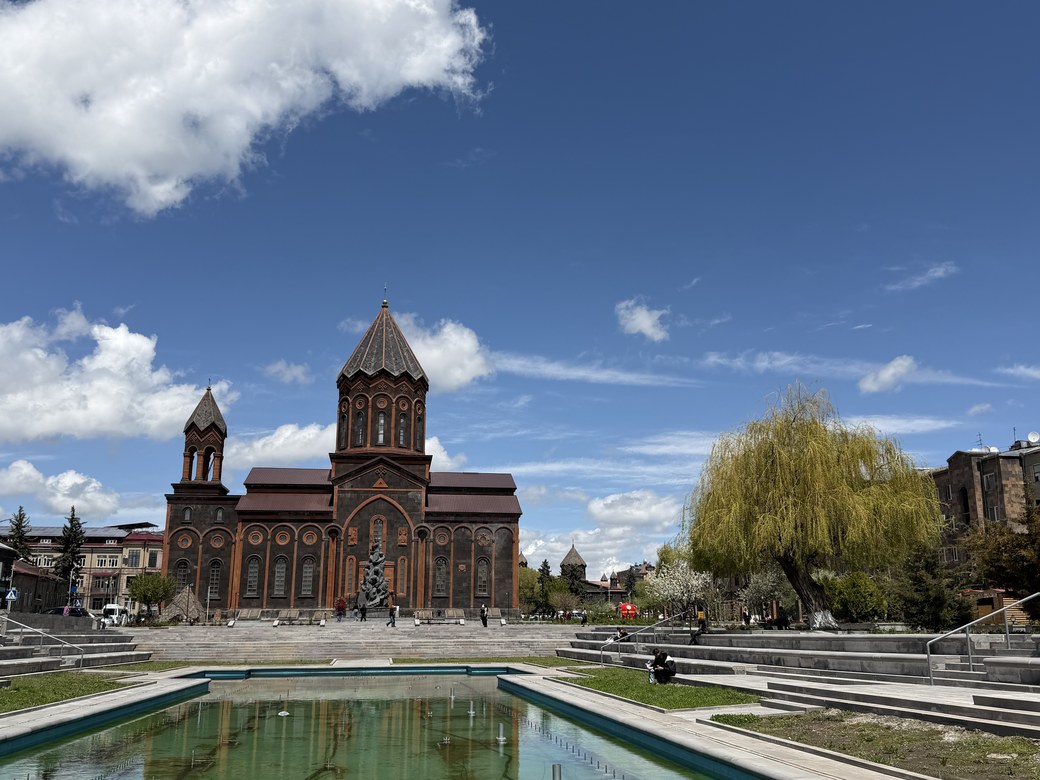
If the monasteries leave you wanting more, take a marshrutka up to Gyumri, Armenia's second city and one of the biggest surprises of my trip. Every guide I read made it sound like the city was still in ruins after the 1988 earthquake. Instead I found a gorgeous downtown of black volcanic stone, a sea of white blossoms and two churches that feel nothing like the bare monasteries in the countryside.
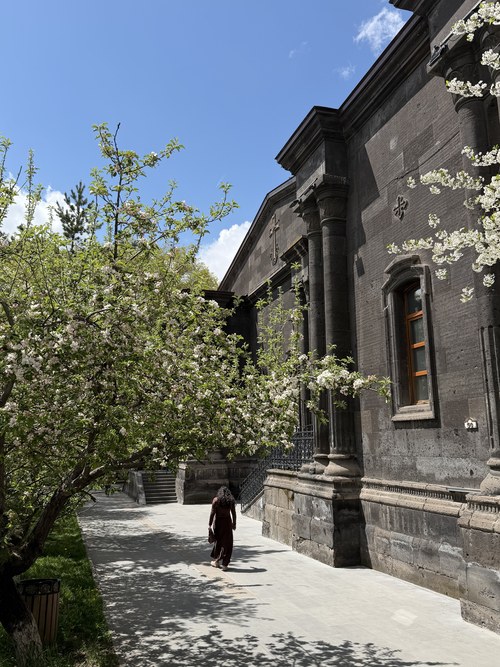
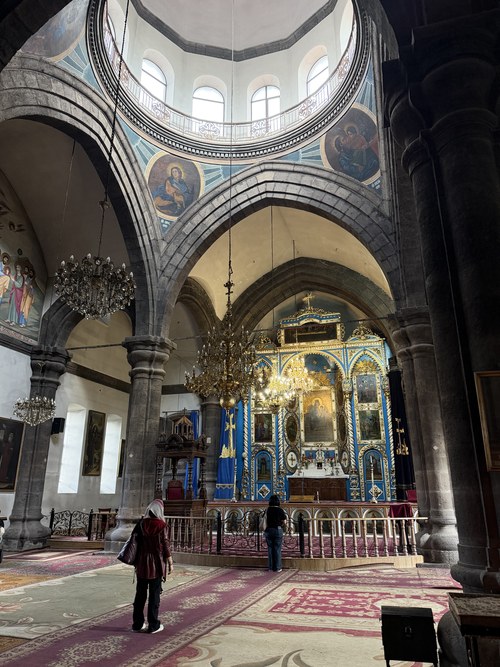
St. All Saviors Church sits at the end of a long reflecting pool lined with willow trees, with pieces of its facade still lying in the grass from the earthquake, and inside, it is flashy and freshly painted. Two minutes north of the main square, the Cathedral of the Holy Mother of God stands in an enormous yard of trees that were all covered in white blossoms when I visited. Its two domes fell in the earthquake and now sit on the ground, where you can walk right up to them. The marshrutka is about 3 hours and 1,500 AMD (about $4) each way, and my Gyumri guide has the rest of the day.
7. Try Armenian Food
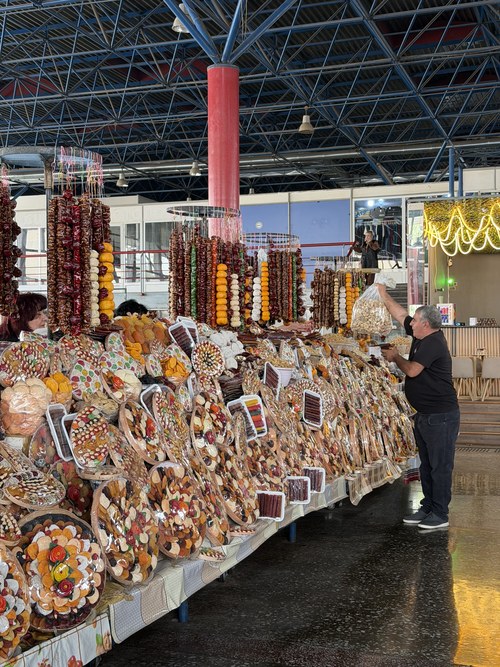
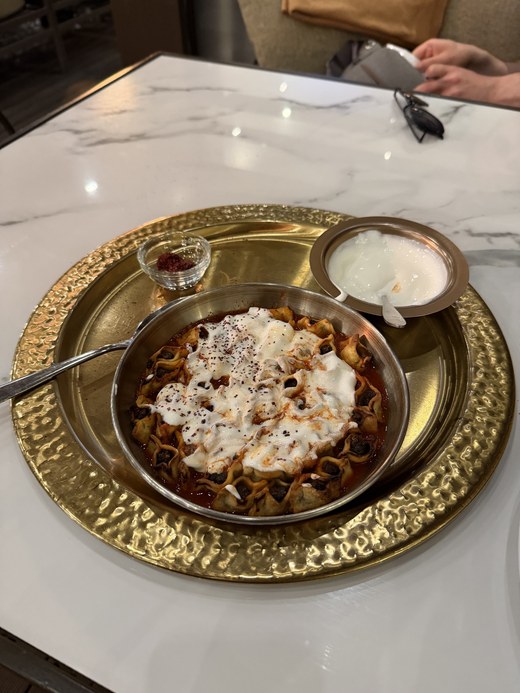
Armenian food was the biggest surprise of the trip. It felt like a mix of Turkish, Persian and Georgian cooking, with spiced meat and lavash at almost every meal. Start with lahmajun, a thin flatbread covered in spiced lamb, and manti, little dumplings baked until crispy and served with yogurt and tomato sauce. Don't skip the lavash either: the thin "carpet" of bread baked in an underground oven.
After that, graze your way through GUM Market, where locals do their actual shopping. The vendors hand out samples with zero pressure, so try the sujukh (walnuts dipped in grape juice), dare yourself to bite the rock-hard sausage and take a sip of the famous Armenian brandy. Every dish worth ordering is in the cuisine section of my Armenia itinerary.
8. Visit the Genocide Museum
-3-mob-2x.jpg)
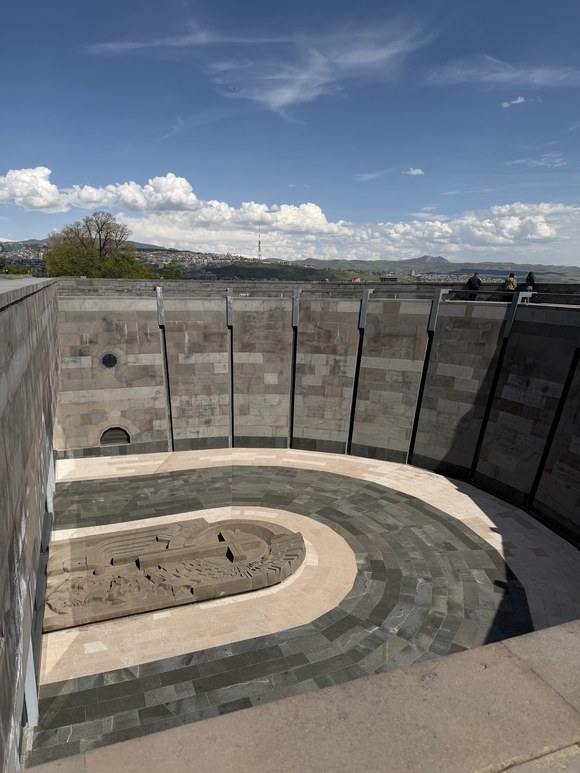
The Armenian Genocide Museum is the one visit in Yerevan I wouldn't skip. It's heavy, but it's key to understanding the Armenian people, the diaspora and how it has shaped the country today. Up on a hill overlooking Yerevan, 12 leaning basalt slabs, one for each of the lost provinces of Western Armenia, circle an eternal flame, and the museum itself is underground.
The exhibits go through what happened step by step, death marches into the Syrian desert included, and end on the fact that only 34 countries officially call it a genocide today. Entry is free, but give it 2 to 3 hours. Visiting the museum impacted the rest of my trip and really influenced how I viewed and understood Armenia.
9. Wander Around and Hunt for Soviet Relics
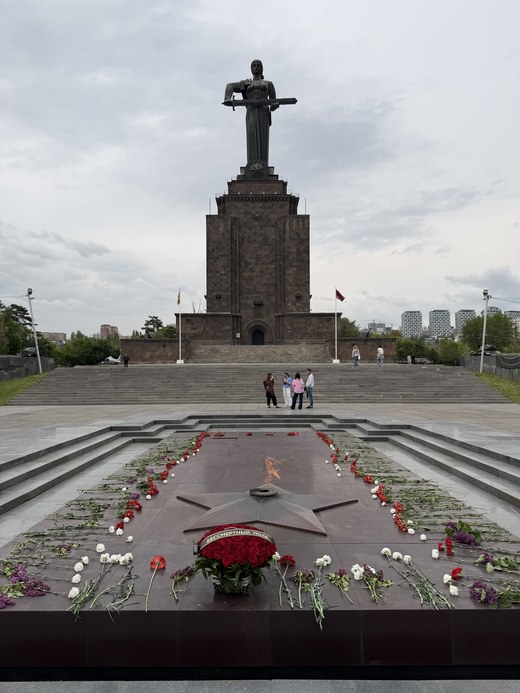
Armenia is full of Soviet leftovers, and wandering aimlessly, hunting for them, was one of my favorite ways to spend a day. In Yerevan, walk up behind the Cascade to Victory Park for Mother Armenia, a WWII memorial and a collection of Soviet tanks, missiles and planes, then stick your head into the lobby of the 1930s Moscow Cinema for its marble relief of Soviet musicians. In Gyumri, old Soviet buses still run through town, a vintage bread truck sells loaves by the market and Central Park has an arcade of Soviet game machines that still work to this day.
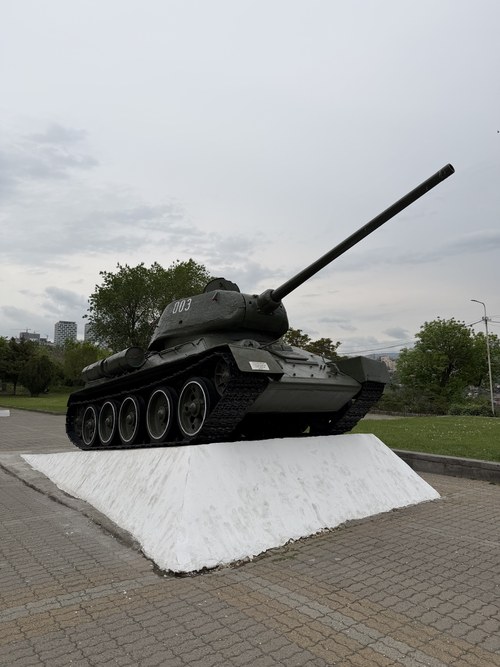
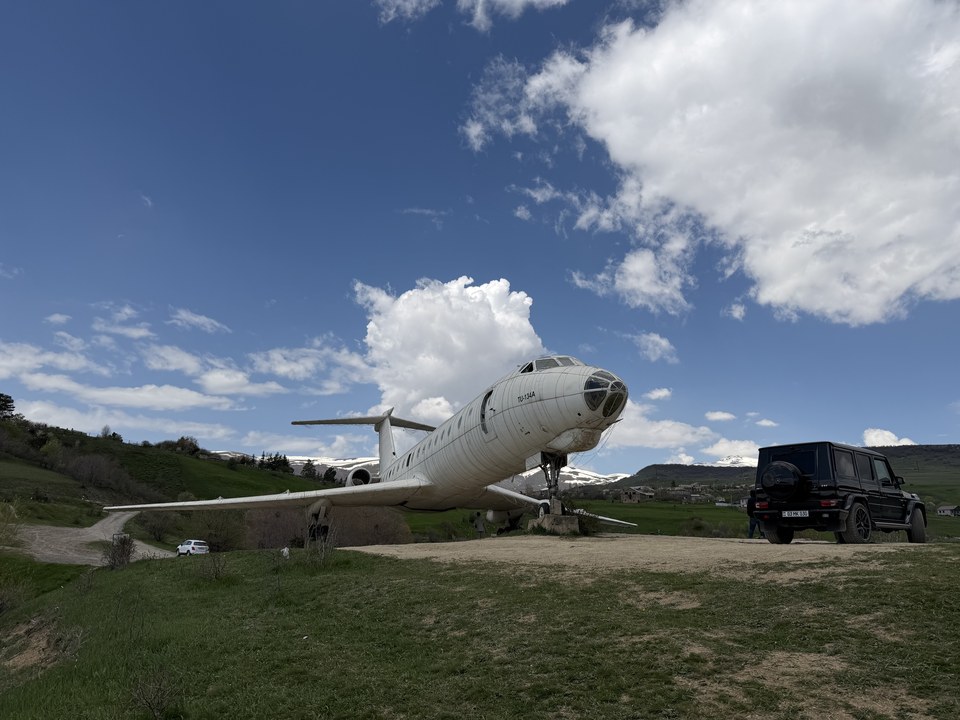
The best relics are out in the countryside. North of Yerevan, a Soviet Tu-134A airliner has been parked on the banks of the Hrazdan Reservoir for no obvious reason, and the Black Wall, an old mine face down an unmarked dirt road, had no other visitors when we found it.
10. Visit Sevanavank Monastery
-mob-2x.jpg)
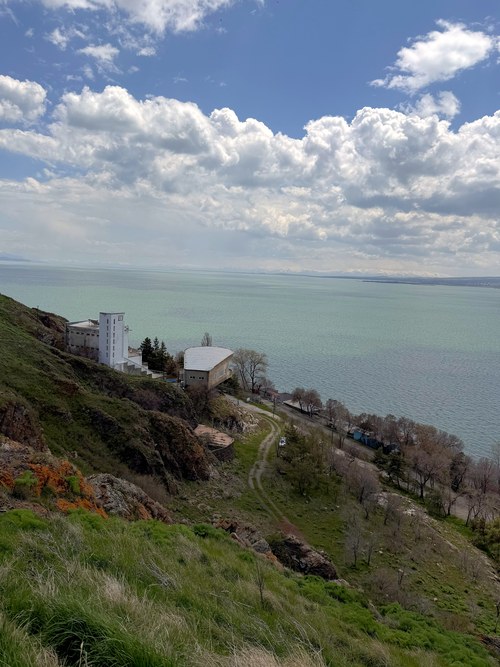
Lake Sevan, an hour and a half from Yerevan, is Armenia's best-known lake: a huge sheet of bright blue water ringed by mountains. Head to Sevanavank Monastery, which sits on a peninsula on the lake. Climb to the top of the hill for the best view over the whole lake, where you can pick out the Sevan Writers' House, the Soviet-era retreat where Armenia's writers used to gather.
Beware of the crazy old man who chased us with a pigeon and tried to put it on our shoulders while yelling strange things in Russian! When summer in Yerevan gets too hot, this is where locals escape to. Give it half a day, or combine it with other stops like the Orgov Observatory the way I did on my road trip.
Ten spots barely scratches the surface of this wonderful country. If you're planning the full week, my Armenia Travel Guide with Perfect 7-Day Itinerary lays it all out. You can also browse everything I've written on Armenia here.